
Discover Kibitsu Jinja: An Enchanting Shrine in Okayama’s Countryside
As a shrine and temple lover, I enjoy using this blog to introduce lesser-known places I discover while exploring Japan. When visiting Okayama city, most travelers focus on Okayama Korakuen and Okayama Castle, and while they are absolutely worth visiting, few people venture beyond them.
Just 20 minutes from central Okayama, Kibitsu Jinja (吉備津神社) is a beautiful and atmospheric shrine set in peaceful countryside. Despite its historical importance and charming surroundings, it remains largely overlooked by international visitors.
In this article, I’ll share why you should visit Kibitsu jinja, what it was like exploring the area, and some tips to help you plan your visit. If you’re looking to add a quiet and authentic stop to your Okayama itinerary, Kibitsu jinja might just be the hidden gem you’re looking for.
Why Visit Kibitsu Jinja
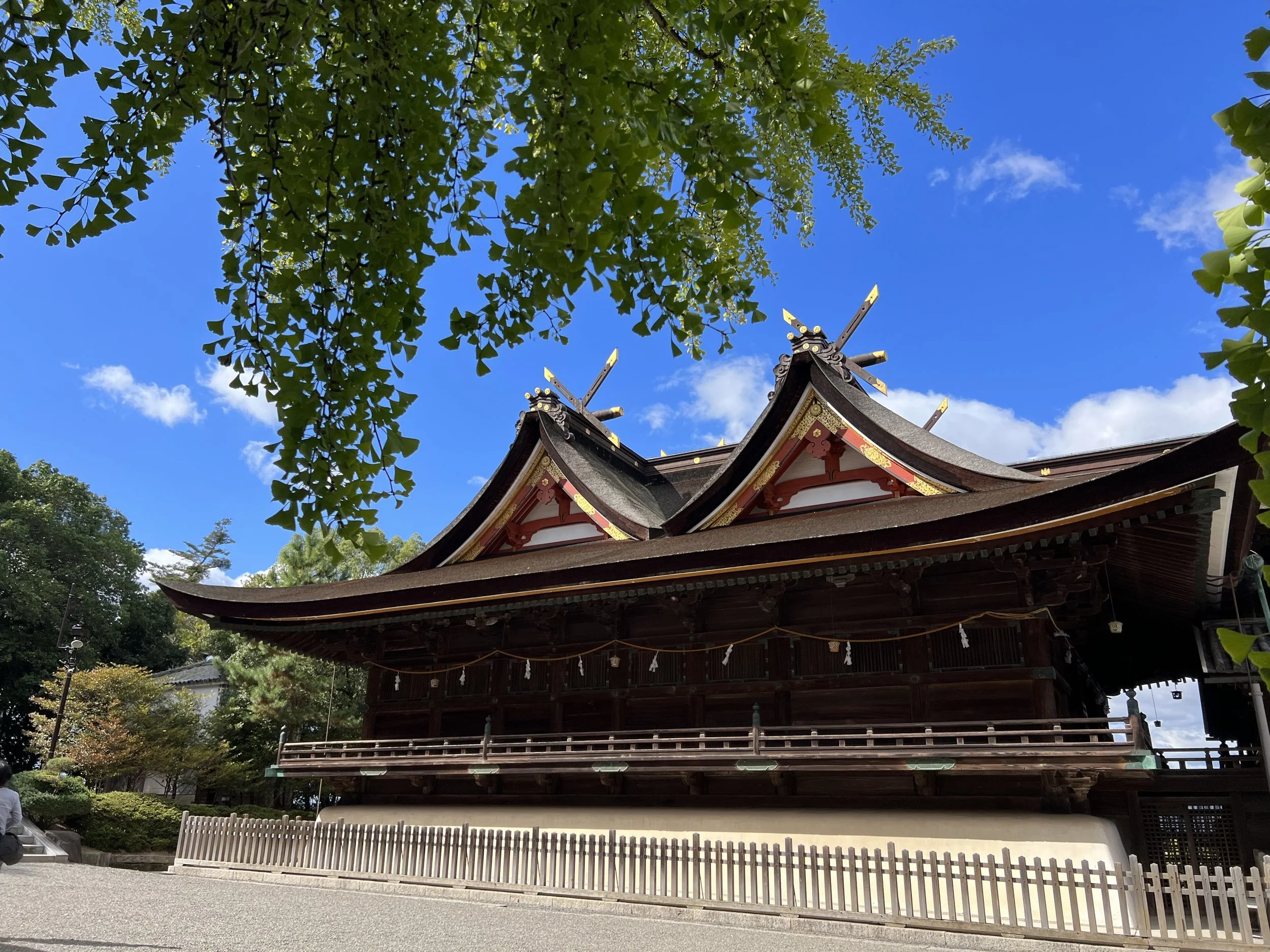
Kibitsu jinja is one of the most important Shinto shrines in Okayama prefecture, whose origins are uncertain. It is also widely considered the birthplace of the famous Momotaro ogre-slaying legend, one of Japan’s most well-known folk tales. The legend is based on a real prince, Kibitsuhiko-no-Mikoto, who is honored at this shrine.
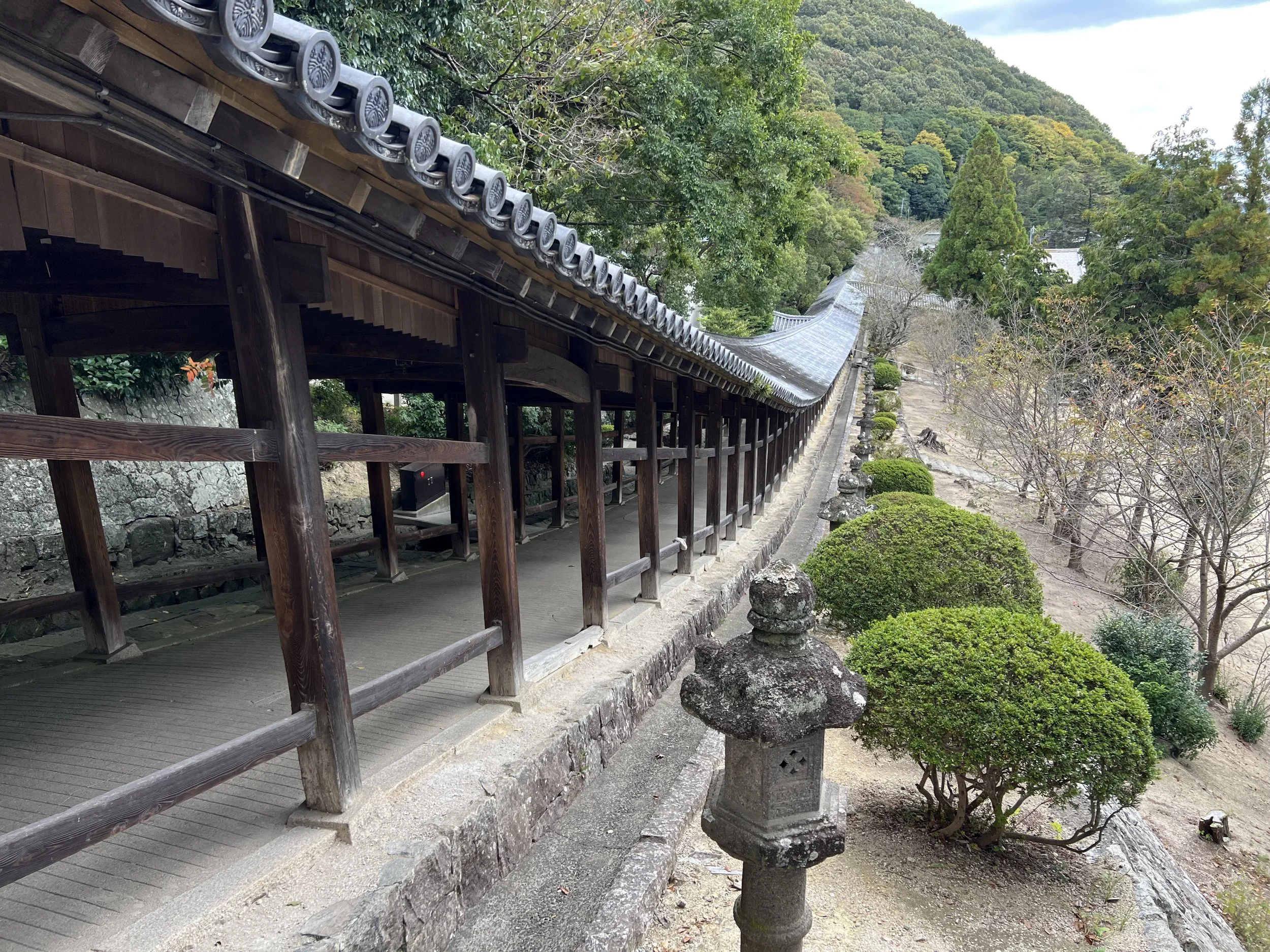
Kibitsu jinja is also admired for its rare architectural style. The shrine’s main hall is built in Kibitsu-zukuri, a structure unique to this shrine and designated as a National Treasure. Another highlight is the long 360-metters covered wooden corridor stretching along the hillside.
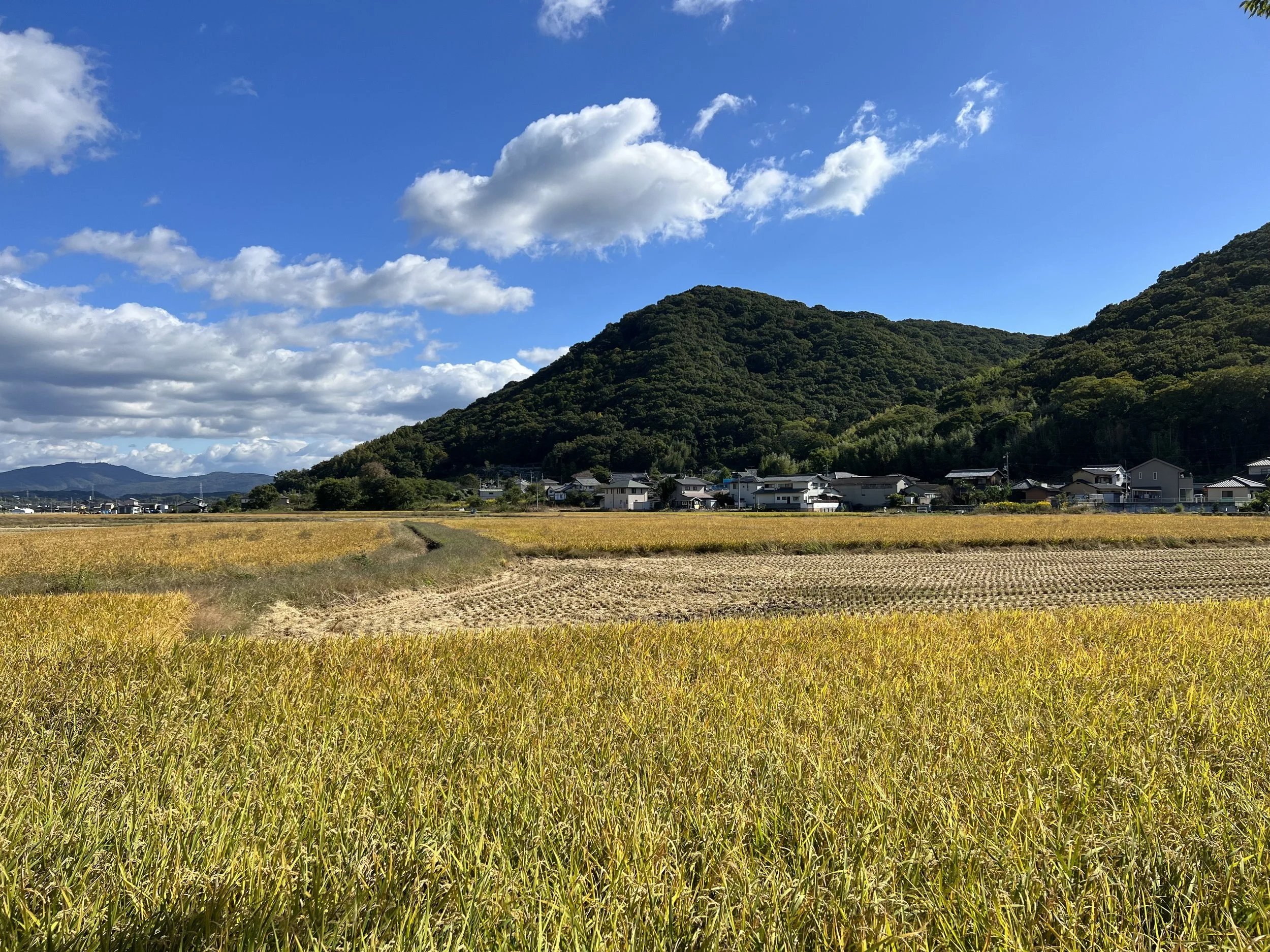
Personally, what made Kibitsu Jinja particularly special was its setting. Surrounded by fields and low mountains, the shrine feels far removed from urban Okayama, even though it’s still within the city borders and is only about 20 minutes from Okayama station. It was a pleasure to just wander around the area.
Visiting Kibitsu Jinja: My Experience
After staying overnight in Okayama, I traveled from Okayama station in the morning and arrived at Kibitsu Station after a 20 min ride. I was immediately welcomed by open countryside views, a real contrast from central Okayama. From the station, it’s about a 10-minute walk to the shrine, and the route itself already felt like part of the experience with autumn colors revealing themselves in the fields, as I was visiting in late October.
The walk began by passing through a large torii gate and continued along a quiet omotesando alley lined with tall Japanese pine trees. This approach leads to the north entrance of Kibitsu jinja. A few shops can be found near the entrance, selling souvenirs and local snacks, before the climb up the stone steps into the shrine grounds.
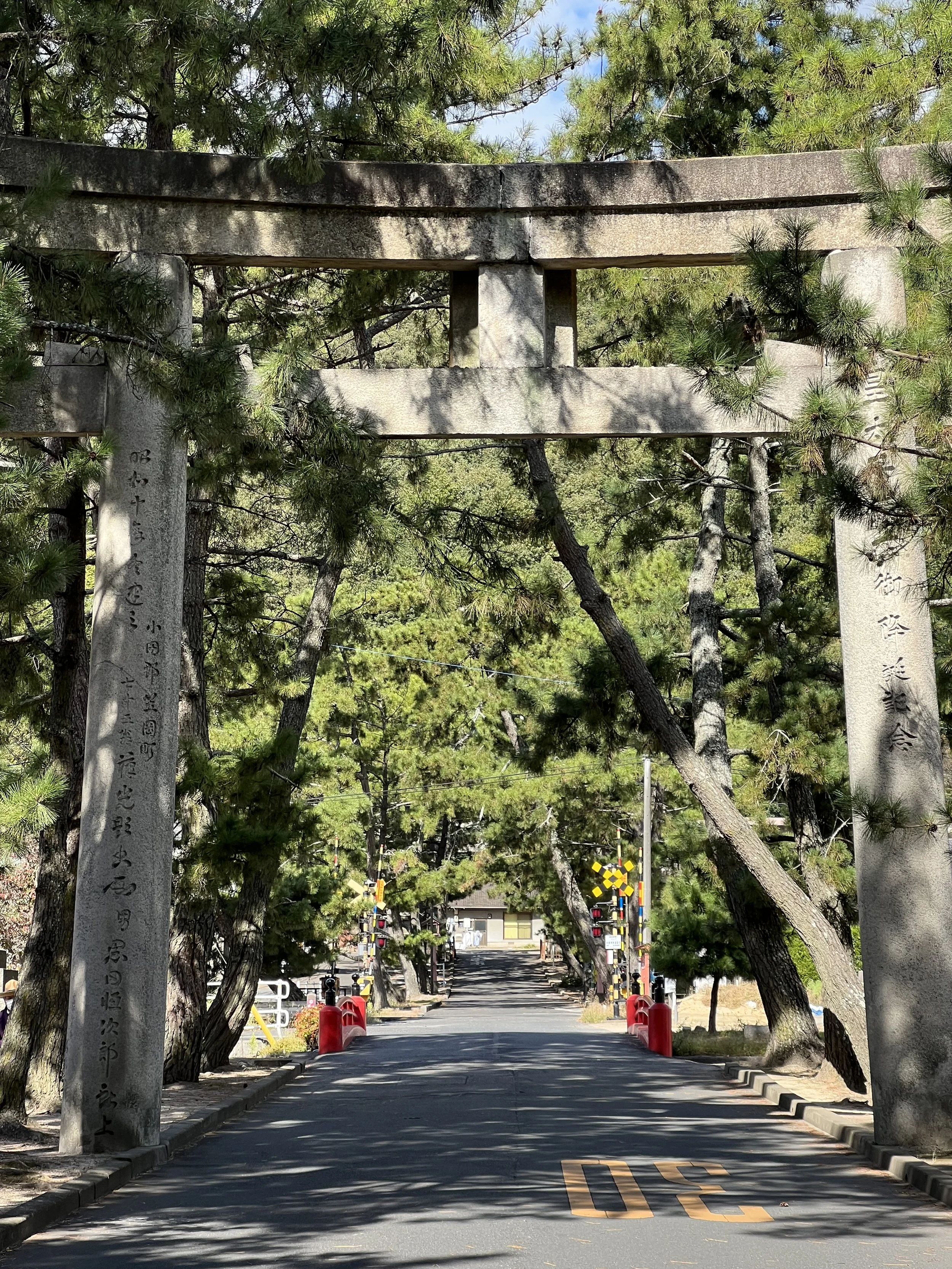
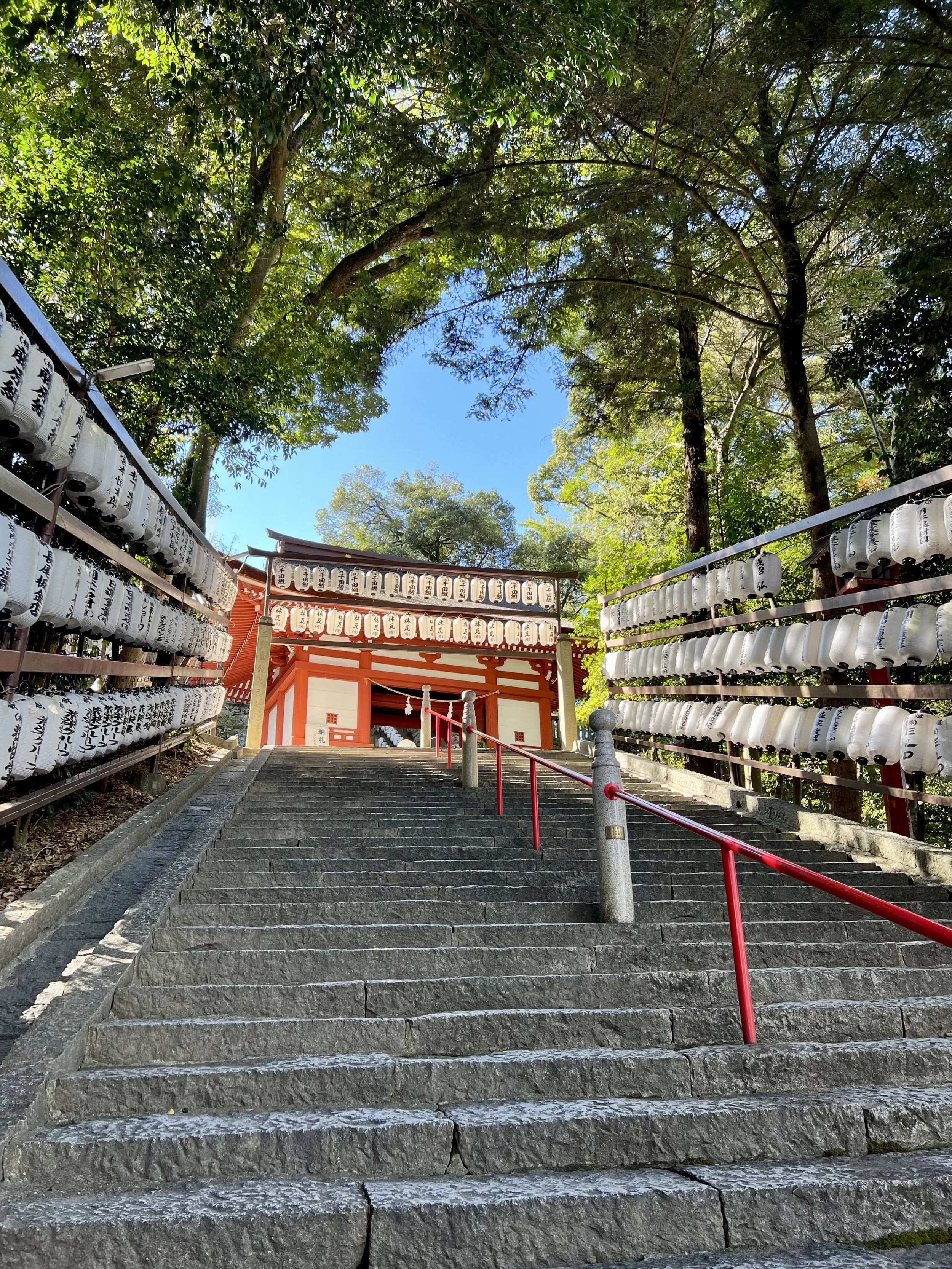
North Entrance to Kibitsu Jinja
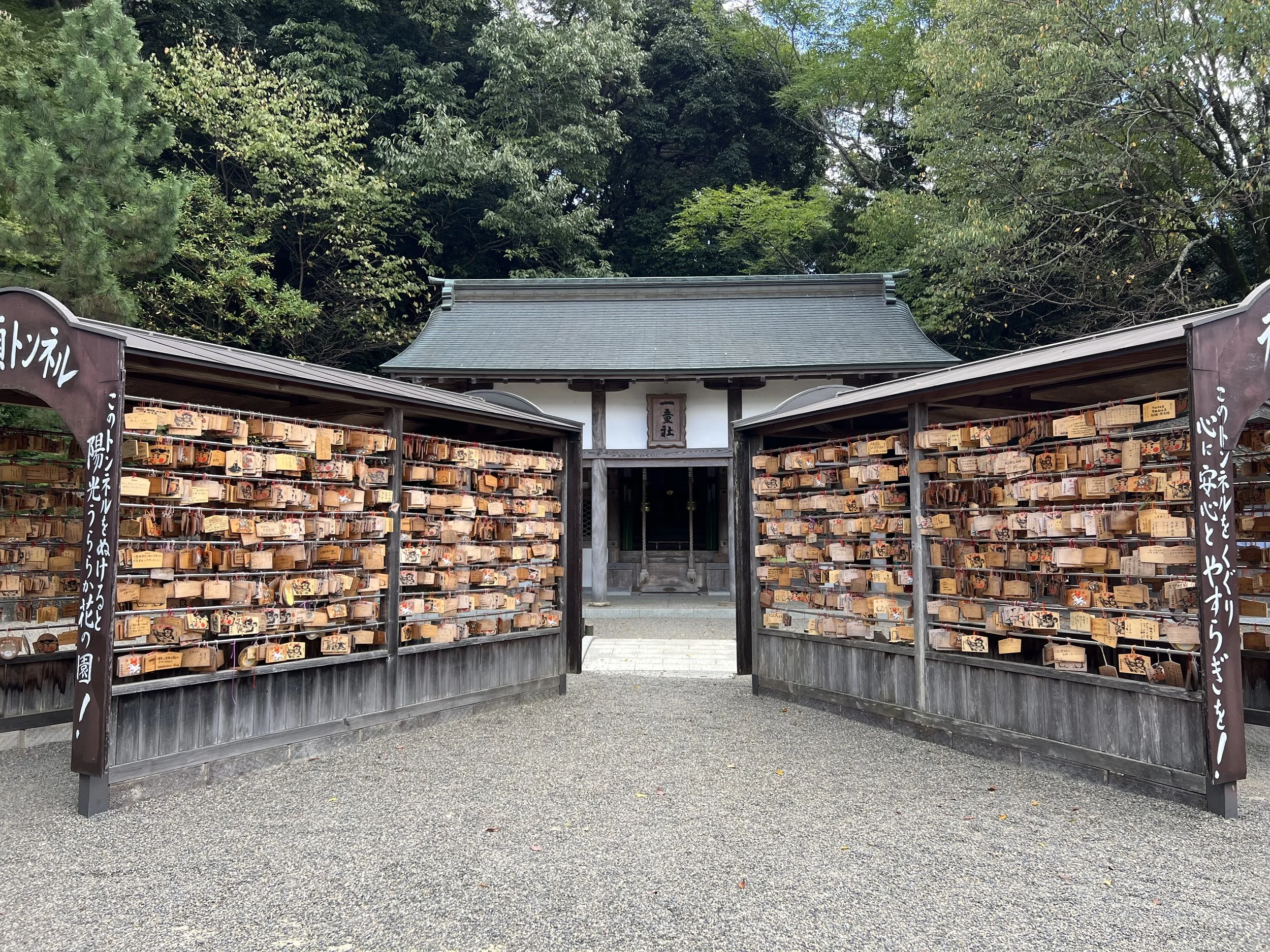
Once inside, the shrine complex opens up into several buildings spread across a peaceful, well-maintained site. I took my time walking around, stopping by the small booth selling amulets, ema (small wooden plaques), and goshuin, admiring the small pond filled with koi fish. I was impressed by the big gingko tree next to the main building or honten, and could imagine how beautiful it would be once it would turn golden.
There were very few people, and I loved the peaceful atmosphere, which encouraged a leisurely visit without rushing.
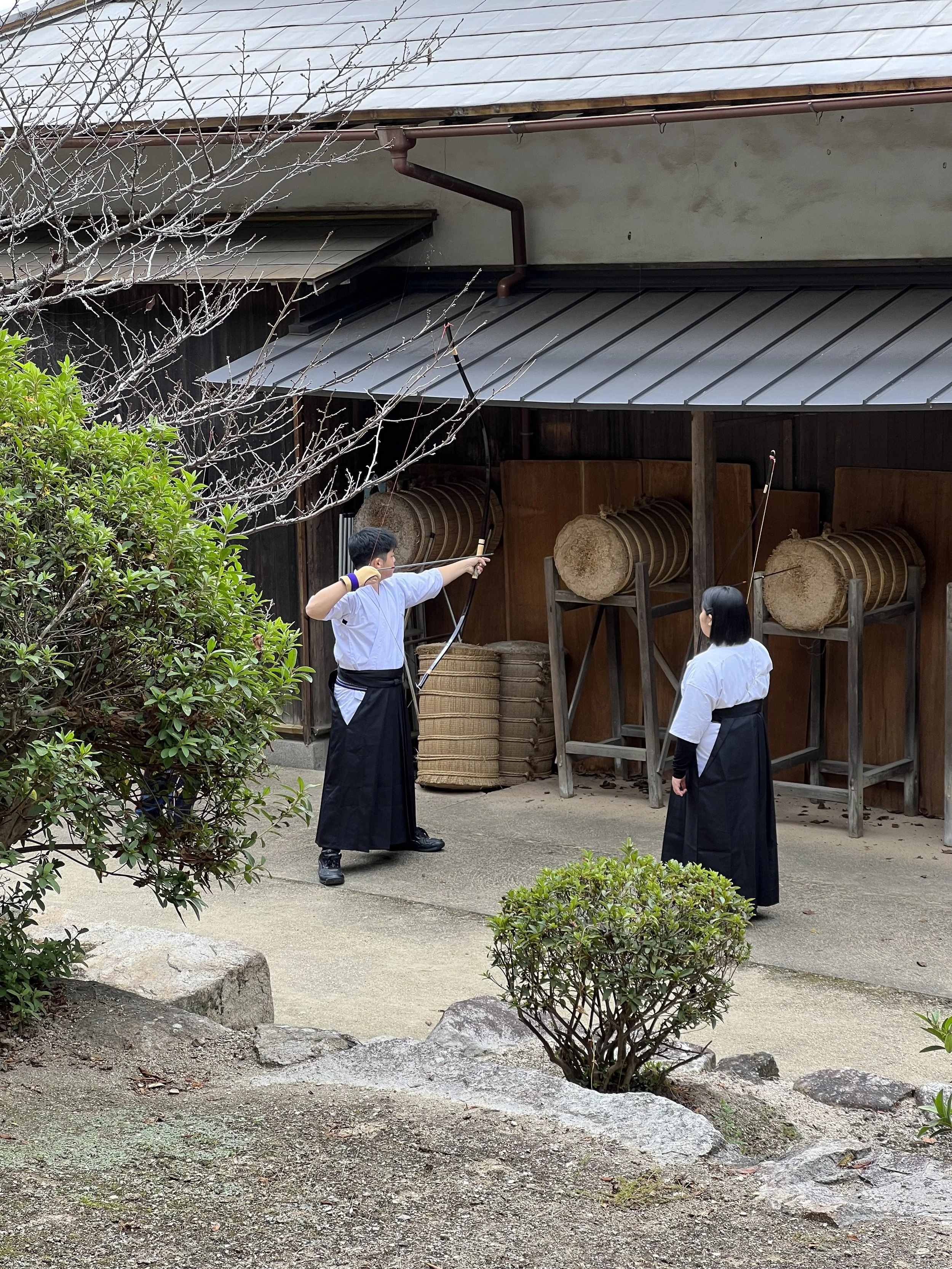
One of the highlights of the visit was the long covered passageway. Stretching along the hillside, it’s truly impressive and unlike anything I’ve seen at other shrines in Japan. During my visit, I was also lucky enough to see an archery practice taking place at an archery range located toward the end of the corridor.
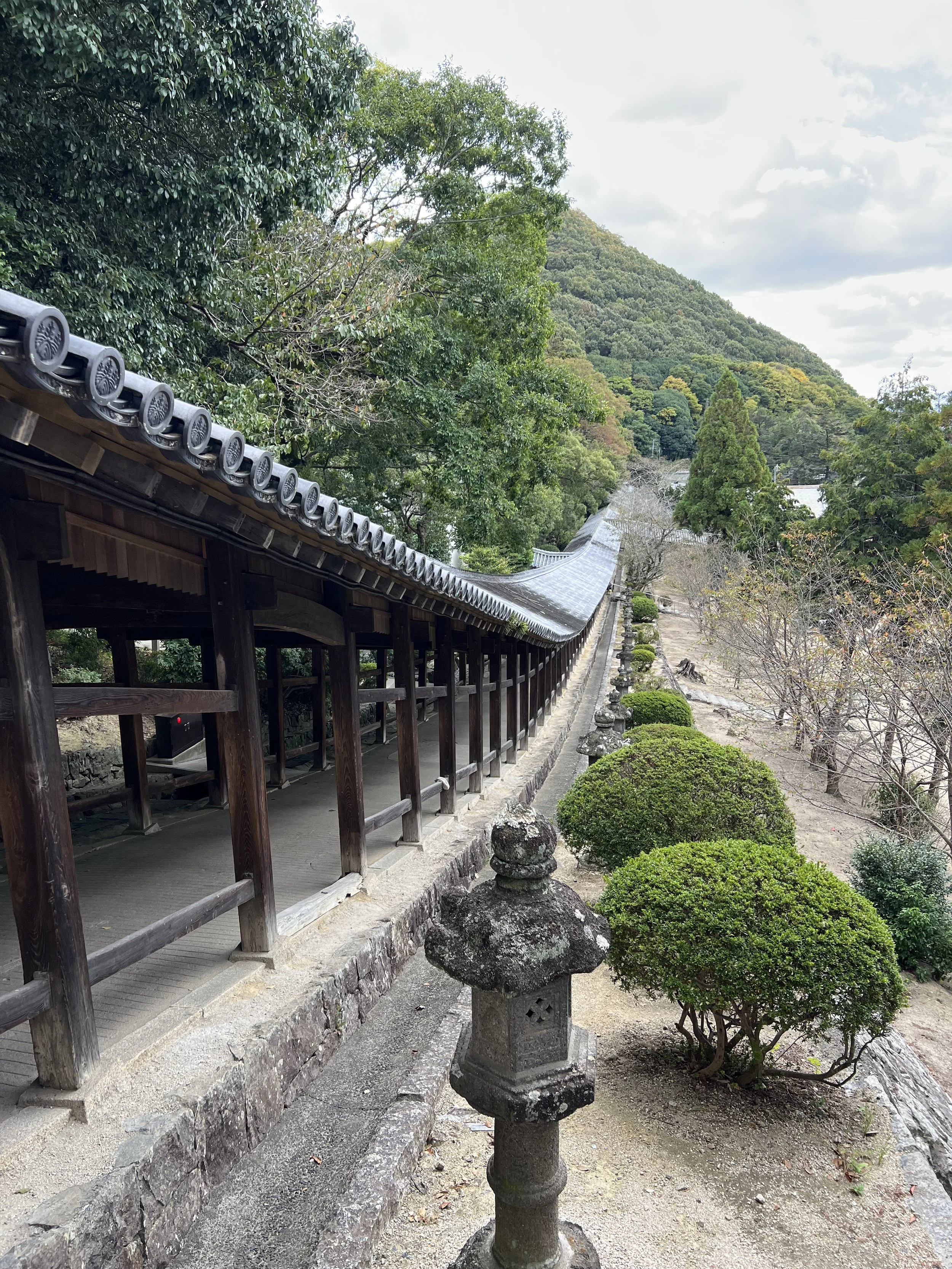
Kibitsu jinja’s long wooden corridor
Other Places to See in Kibitsu
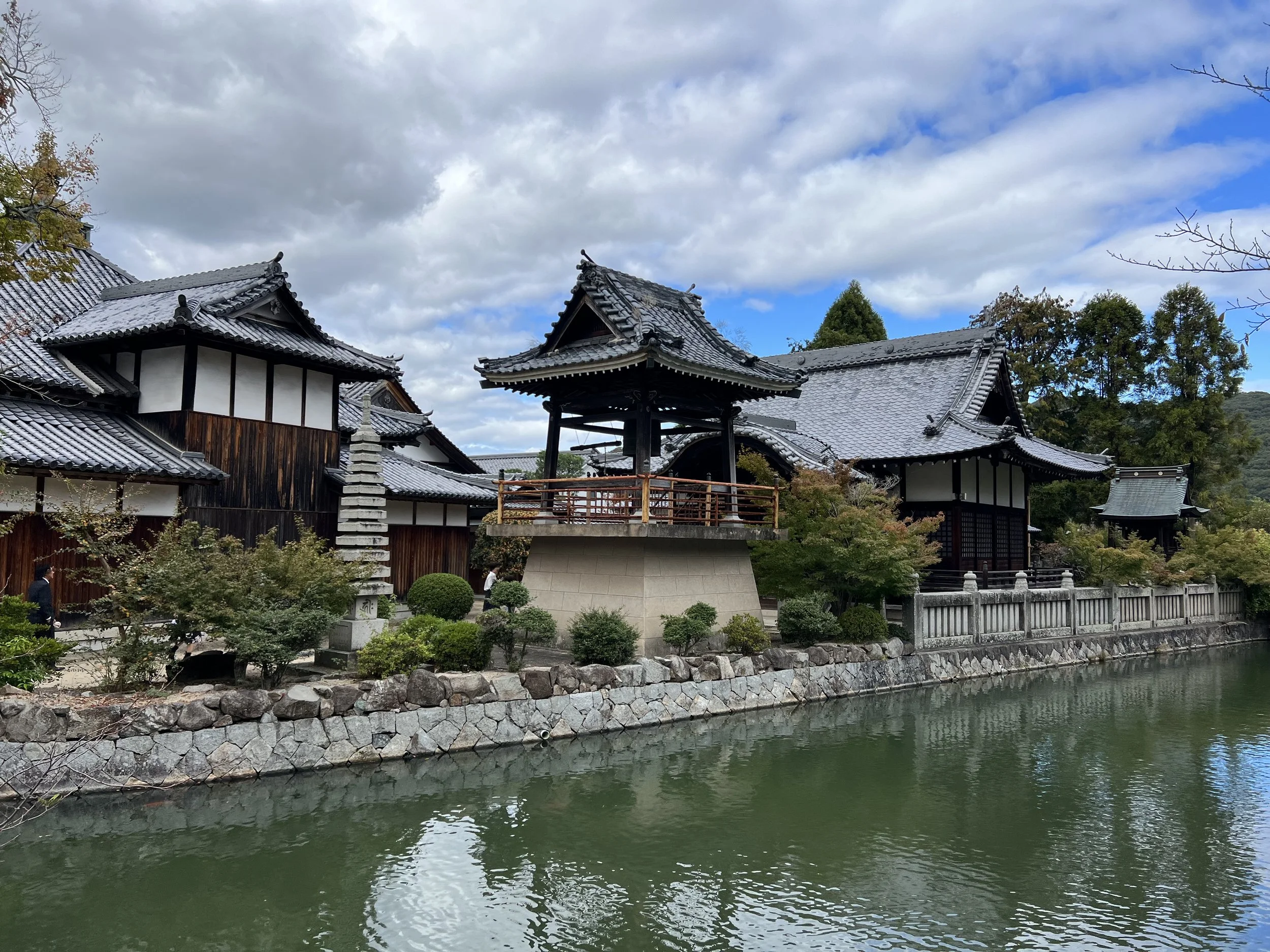
After finishing my visit to Kibitsu jinja, I explored a few nearby sites, including Uga shrine (宇賀神社) and the other temples located around the nearby pond.
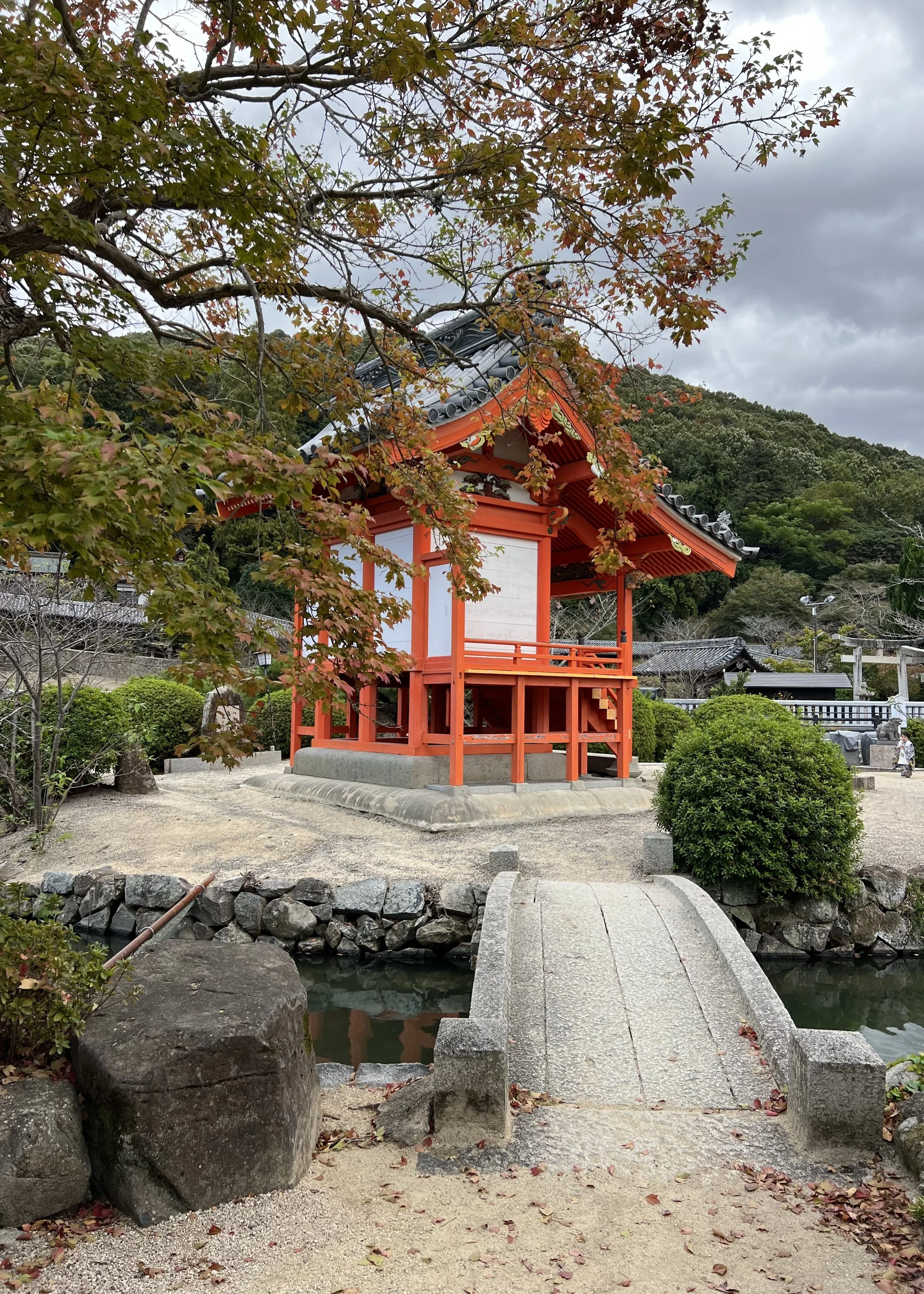
Uga Shrine
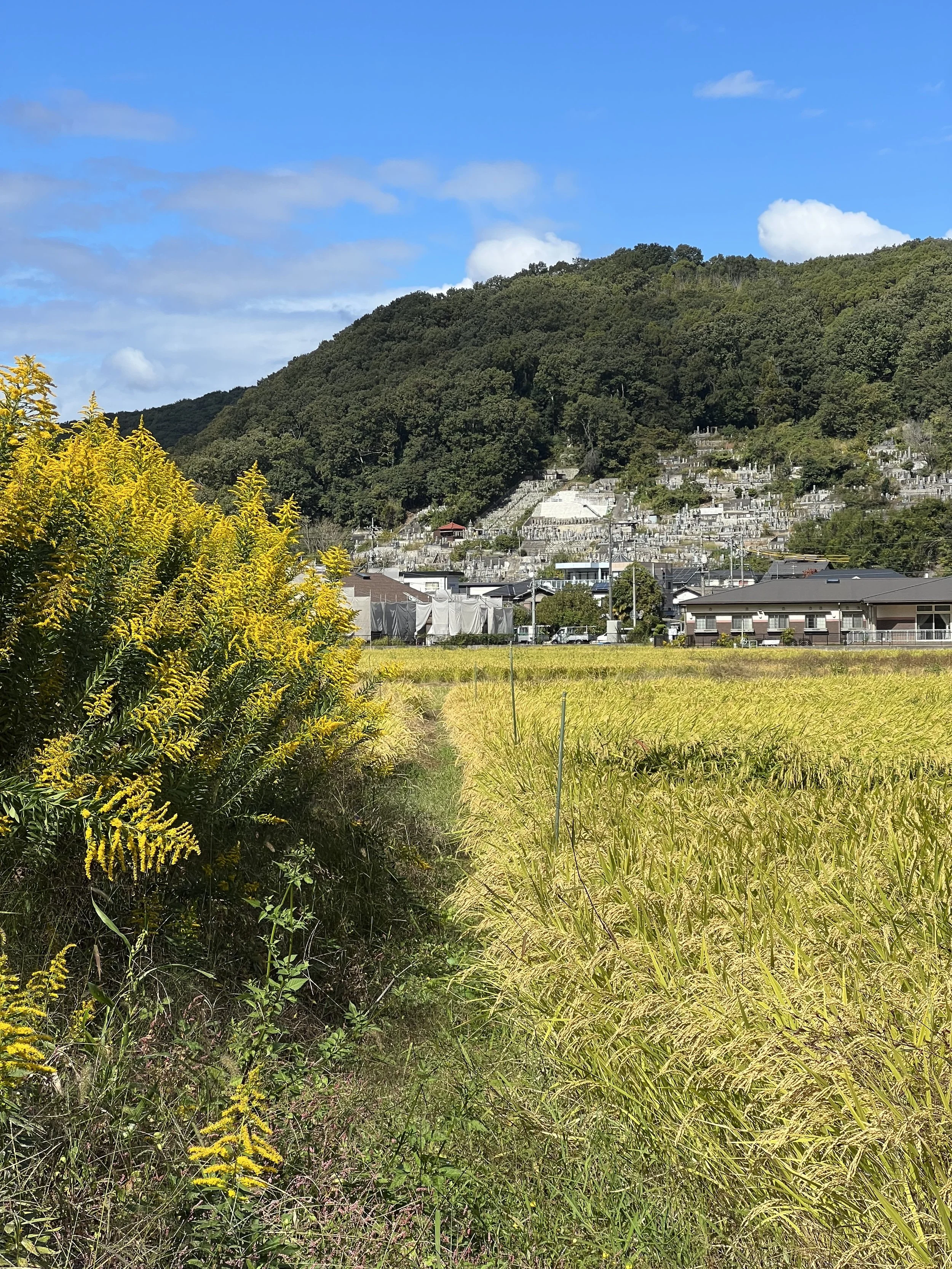
I enjoyed a slow walk back to the station while enjoying the countryside atmosphere. It was then time to continue exploring Okayama.
Shrine Access & Information
How to Get to Kibitsu Jinja?
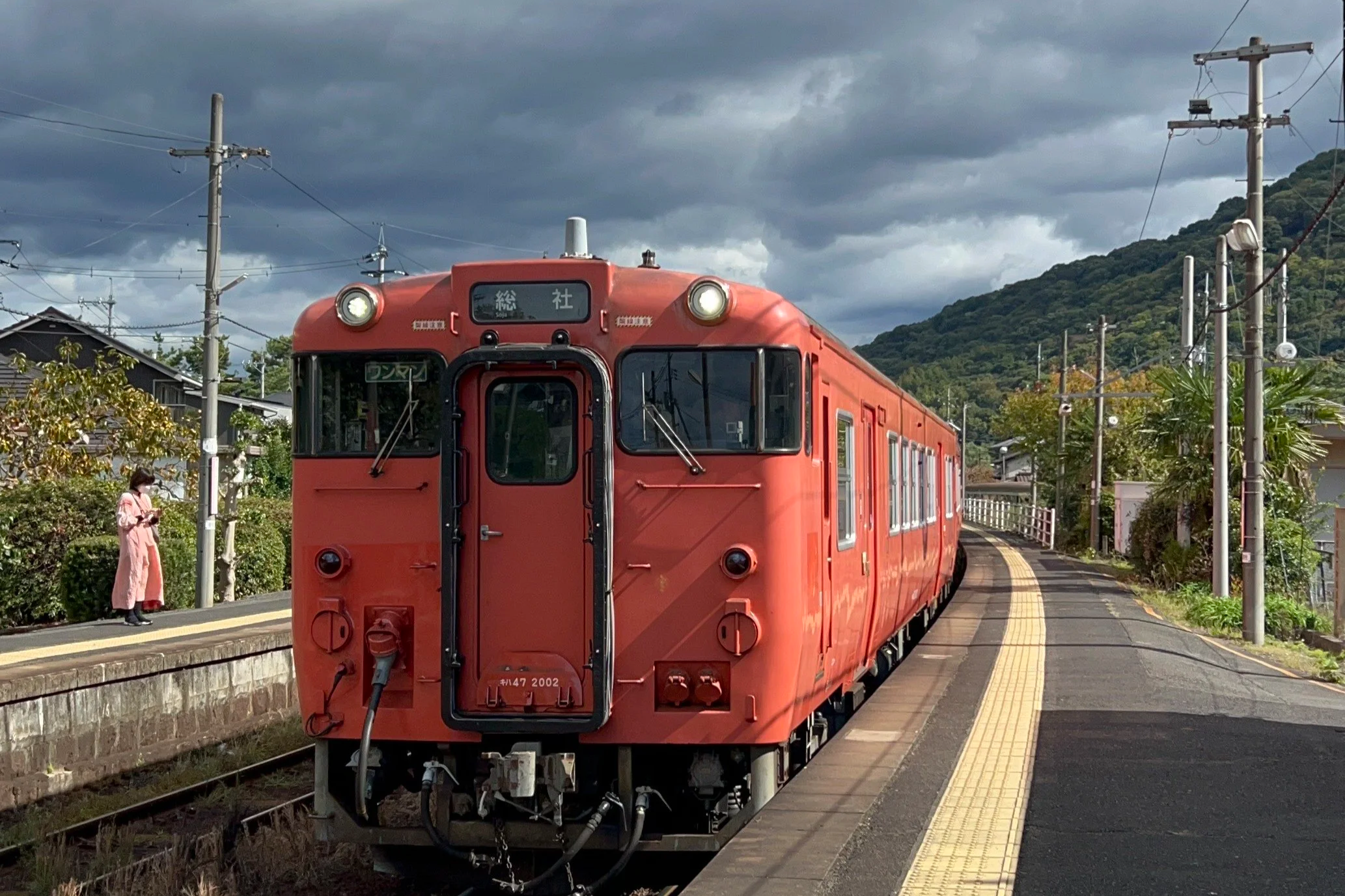
Kibitsu jinja is easily accessible from centra Okayama. From Okayama Station, take the JR Kibi Line to Kibitsu Station (吉備津駅). The journey takes about 20 minutes.
From Kibitsu Station, it’s a 10-minute walk to the shrine. The walk from the station is flat and scenic, passing through a beautiful countryside landscape.
Practical Information on Kibitsu Jinja
🕓 Opening Hours: Open daily from 8:30am to 5:00pm
🔖 Price: Free entry
➡️ I’d recommend checking the Kibitsu Jinja Official Website (Japanese) before your visit for the latest information.
When to Visit Kibitsu Jinja and How Long to Spend?
Kibitsu jinja can be visited year-round. I visited in late October and loved the early autumn colors in the surrounding area. I recommend to plan 2 hours for this visit. This allows enough time to walk through the shrine complex, visit the long covered corridor, get goshuin or amulets and enjoy the surrounding scenery.
Travel Tips for Visiting Kibitsu Jinja
Check Train Times in Advance
The JR Kibi Line, also nicknamed Momotaro Line, runs less frequently than major JR lines so it’s better to check in advance train timetables (I personally use Google Maps).
Combine Kibitsu Jinja with Other Okayama Sights or Kurashiki Onsen
A visit to Kibitsu kinja fits easily into a broader itinerary, whether it’s exploring more of Okayama city, or the nearby Kurashiki Onsen. Thanks to the short travel time, Kibitsu jinja works well as a half-day addition rather than a full-day destination.
Where to Stay
I’d recommend basing yourself in Okayama city or Kurashiki, both of which offer a wide range of accommodations.
Okayama City, best for transport convenience and easy access to other destinations in the region. I stayed at Okayama Koraku Hotel, which was a great and affordable base to explore the city and around.
Kurashiki, ideal if you prefer a more traditional atmosphere.
➡️ I will write detailed guides on Okayama and Kurashiki in the future. Make sure to register to my free monthly newsletter to stay informed about my latest articles.
Other Things to Do Around
If you’re in Okayama, nearby destinations you might want to add to your itinerary include:
Naoshima, an art island famous for the Yayoi Kusama pumpkins and Benesse Art Site. Ferries run regularly from Uno Port near Okayama.
Shikoku, one of Japan’s four main islands that is still very little explored by international visitors but is full of natural and cultural wonders.
Himeji, home to Japan’s most spectacular original castle, and another great stop like Okayama if you’re traveling between Hiroshima and the Kansai region.
➡️ Discover more about Himeji with my guide and 1-day itinerary
To Conclude
Kibitsu jinja is an easy and rewarding addition to an Okayama itinerary, especially if you enjoy quieter shrines with strong cultural significance. With its unique architecture, countryside atmosphere, and ties to the Momotaro legend, it’s the perfect place to slow down and explore somewhere less visited.
➡️ If you enjoyed this article, I recommend you check out more of my articles on lesser-known shrines and temples in Japan.
Found this article helpful? Buy me a coffee. 😊
Want to stay in touch? Subscribe to my monthly newsletter (with latest articles, updates, travel tips and more...) delivered straight to your inbox. 📩
Some of the links in this article are affiliate links. At no extra cost to you, I may earn a small commission when you click on them and make a purchase. And if you do, thanks for your support! Purchasing through these links is a great way to support Travely Notes, as this helps with the costs of running my blog.


Planning your first trip to Japan? You're in for an unforgettable adventure! Japan often leaves a deep impression, that draw travelers to return! However, navigating this incredible country can feel overwhelming for first-time visitors. That’s why I’ve put together these 27 essential Japan travel tips, based on my experience of living in Japan for over 4 years and organizing trips for family and friends. I hope this guide can help you to make your trip smoother, so you can focus on just having the most enjoyable, unforgettable experience in Japan!