
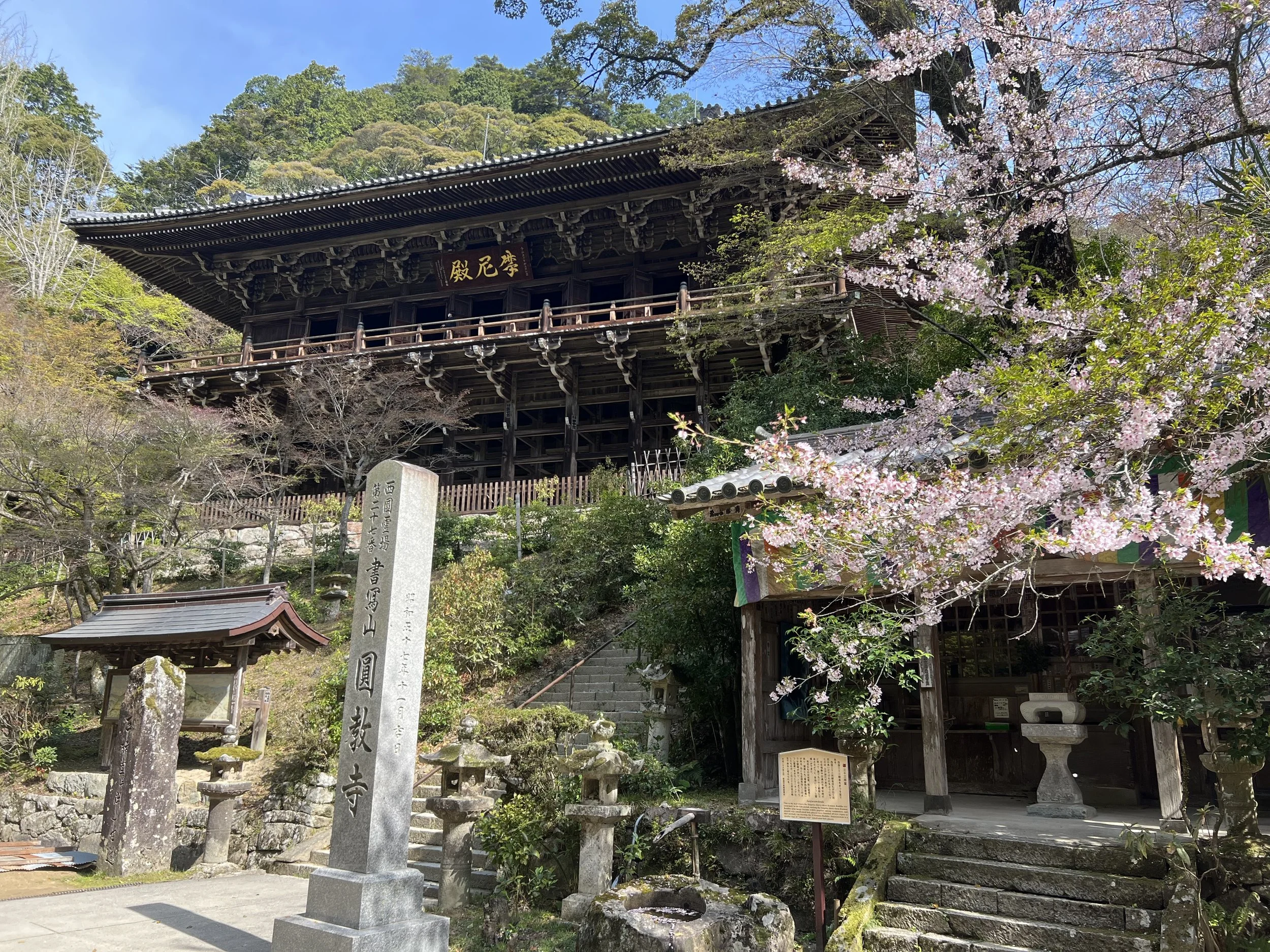
Most international travelers stop at Himeji to visit its majestic castle, but miss this fantastic half-day excursion to Mount Shosha, a sacred mountain where stands an atmospheric temple complex over 1000 years old. As a nature and shrine/temple lover, visiting Mount Shosha had been high on my Japan Bucket list for a long time, and I finally had the opportunity to do so on my last trip to Japan in the spring.
In this article, I’ll share about my experience exploring Mount Shosha, and all the things you need to know to plan your own visit.
Why Visit Mount Shosha?
Mount Shosha (書写山) is a 371-meter-high mountain located in Himeji, Hyogo prefecture. It is home to the Shoshazan Engyo-ji temple complex (円教寺), founded over 1000 years ago (in 966) by Shoku Shonin, a Buddhist monk. This temple was visited by many emperors, monk-emperors and aristocrats and was known as the most important training center for priests in the western part of Kansai. The temple complex is home to eight buildings and seven Buddhist statues that have been recognized as “Important Cultural Properties”. Even today, Mount Shosha remains a pilgrimage site for people from all other Japan. It’s the 27th temple of the Saigoku Kannon Pilgrimage, an ancient pilgrimage route of 33 Buddhist temples.
What I find truly special about Engyoji temple is its remote location and its rich primeval forests, which offer the opportunity for visitors to experience a true sense of of peace and disconnection from modern life in this beautiful natural setting. It’s also a beautiful location to admire Japan’s seasonal beauty, with cherry blossoms in the spring, and colorful leaves in autumn.
One more interesting fact that might interest movie lovers is that Mount Shosha has been a shooting location for several Japanese movies and TV series, as well as the American movie The Last Samurai (2003) featuring Tom Cruise.
How to Get to Mount Shosha from Himeji
Getting to Mount Shosha is easy and takes about 30 minutes by bus, followed by a short ropeway ride.
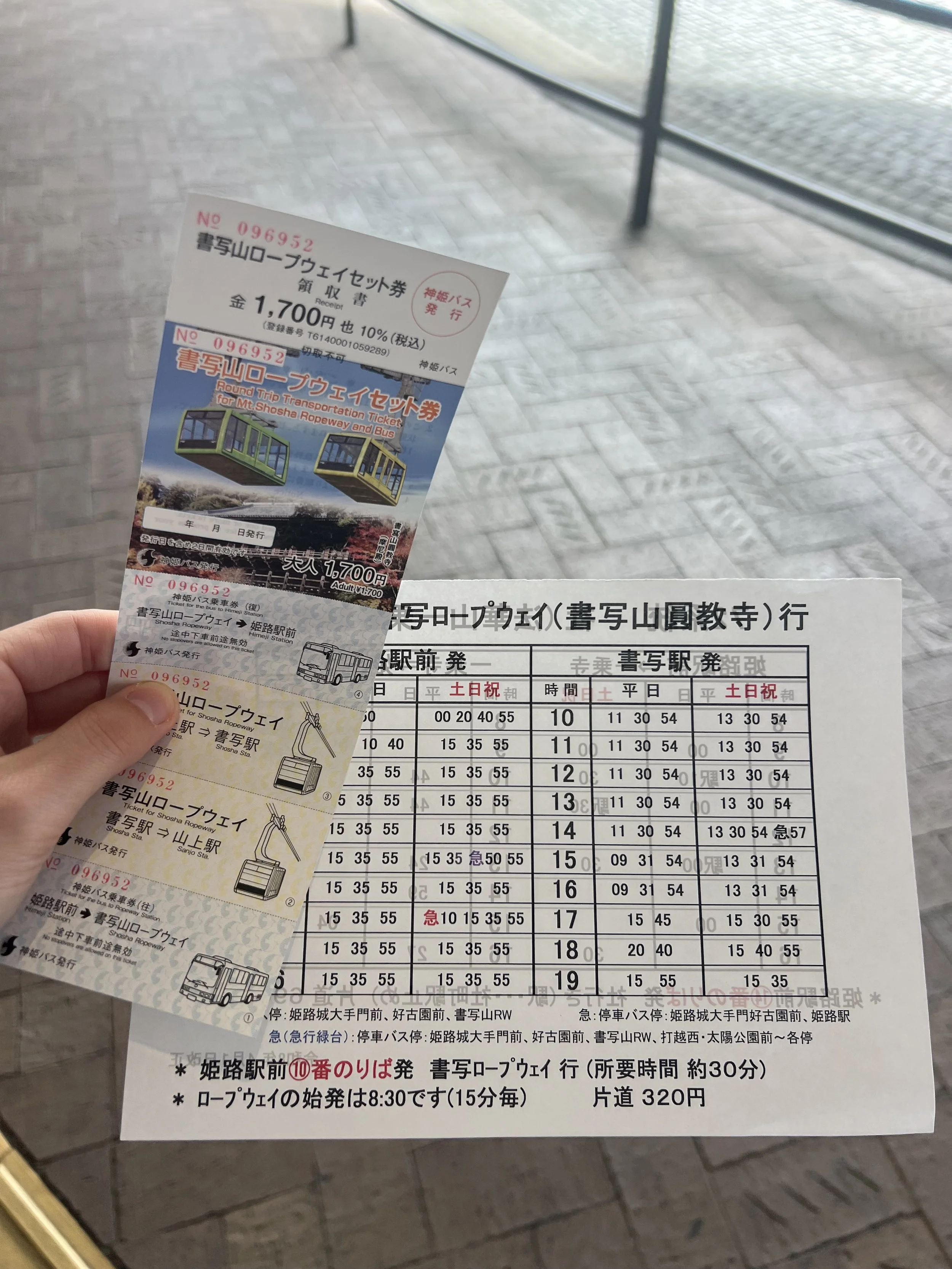
From Himeji station, you’ll need to take a local bus bound to "Mount Shosha Ropeway" (書写山ロープウェイ). The bus departs from bus platform #10 from the North Exit of Himeji station and the journey takes about 30 minutes and costs ¥320. The ropeway is scheduled every 15 min, with the first service starting at 8:30am throughout the year (the time of the last downward service varies depending on the month). The ropeway costs ¥700 yen one way, ¥1200 round trip. You can check the official website for the latest information regarding operation status.
✨ TRAVELY TIP: To save a little money, like I did, you can buy a combined round-trip ticket, including return bus tickets between Himeji and Shosha stations and a ticket for the Shosha Ropeway. The ticket can be purchased at Shinki Bus Information Center (Q-Himeji 1st floor, see location on Google Maps) for ¥1,700 (adult ticket).
Explore Mount Shosha with Me
Take the Ropeway and Admire Views of Himeji
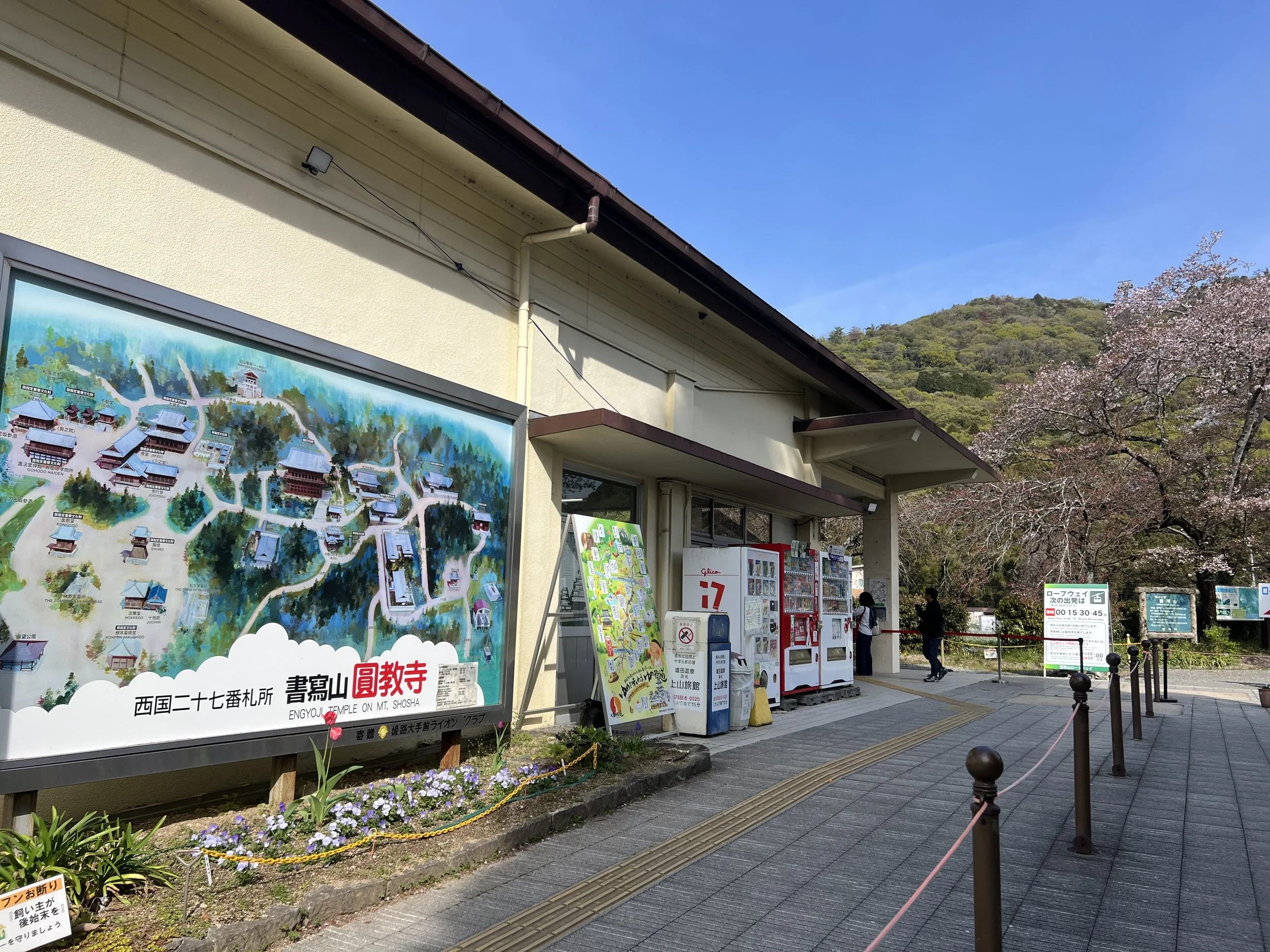
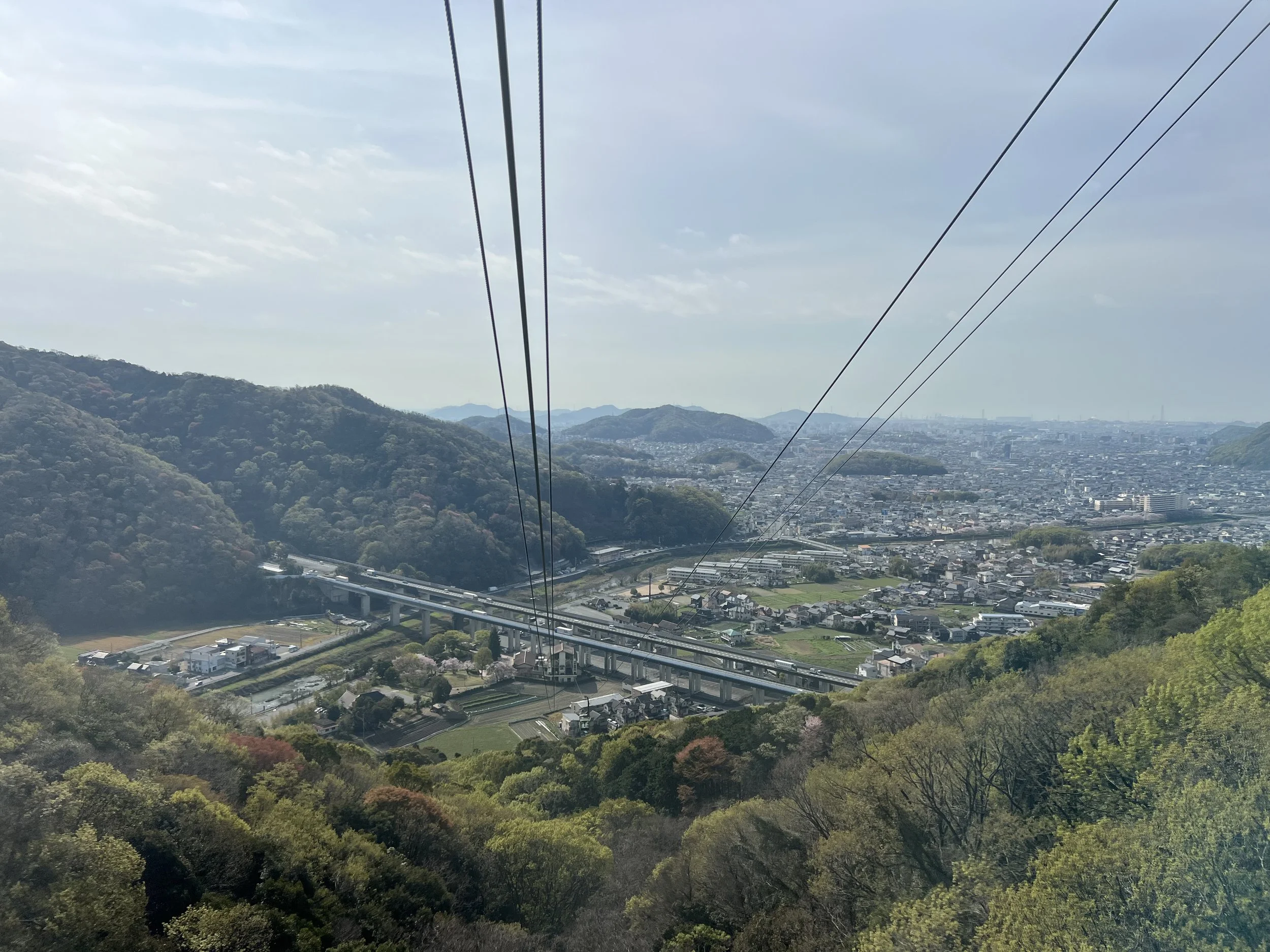
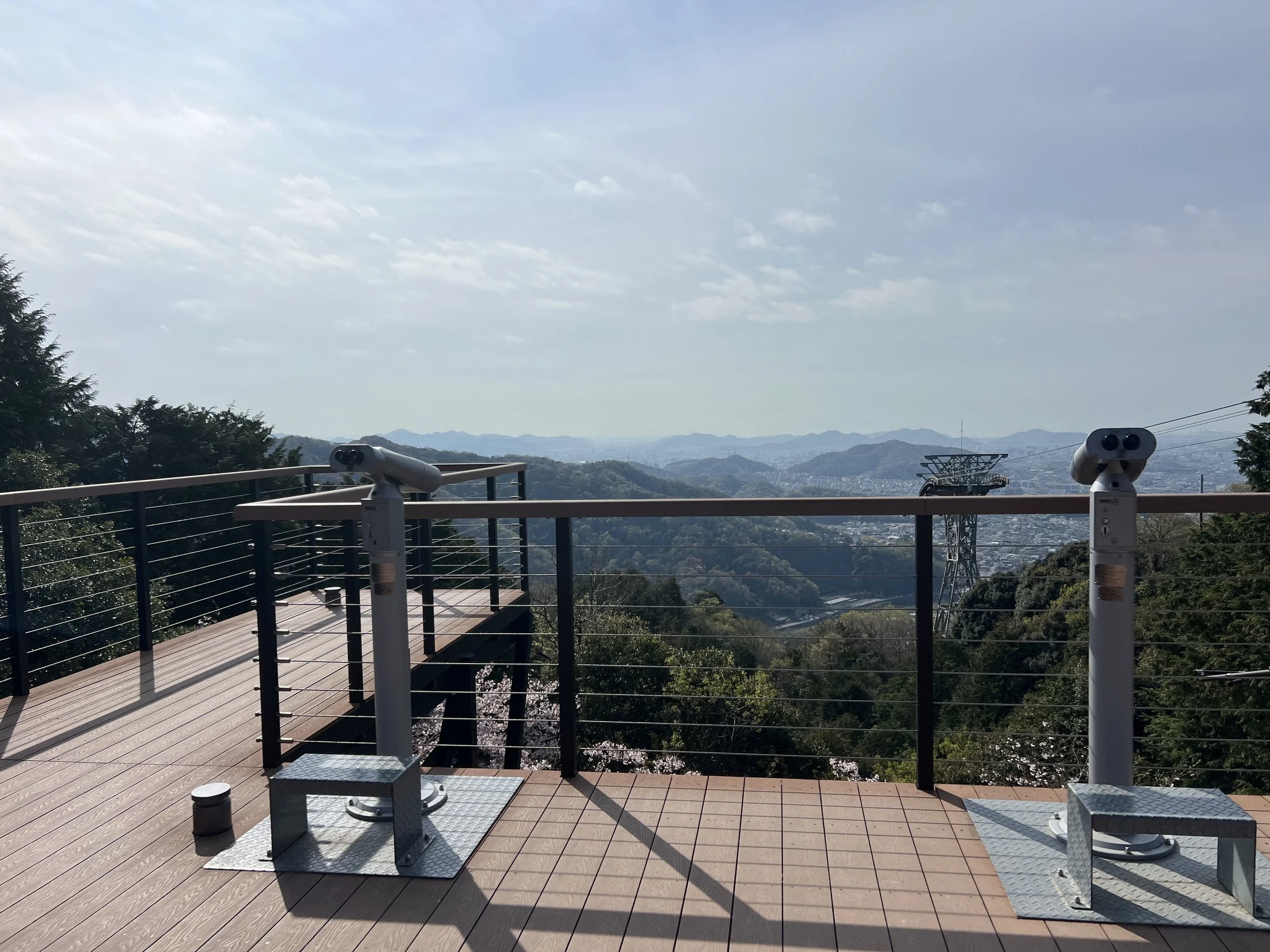
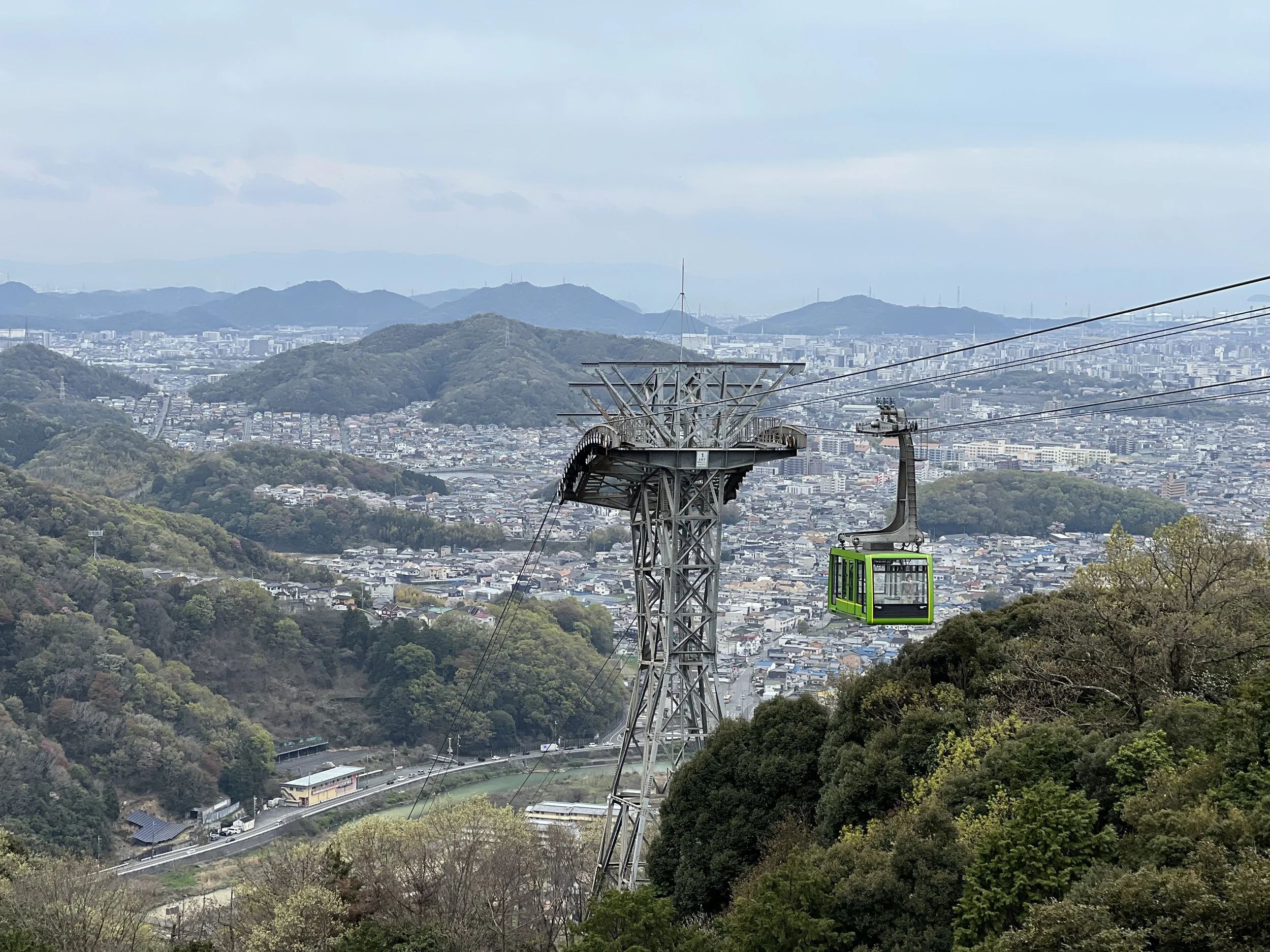
The ropeway terminal is located right next to the bus stop. The journey is short, only a few minutes, but the view of the city and surrounding mountains is lovely. Once arrived at the upper ropeway station called Yamagami St. (山上駅), I recommend taking some time to admire the panoramic view of the Harima plain from the nearby observatory.
Enter Engyo-ji Temple Complex
The entrance to Engyo-ji is just a short walk from the ropeway station; you will need to pay a ¥800 entrance fee. I also recommend picking up a map to help you find your way around the area. I visited in early April and was lucky enough to see the cherry blossoms in bloom near the entrance.
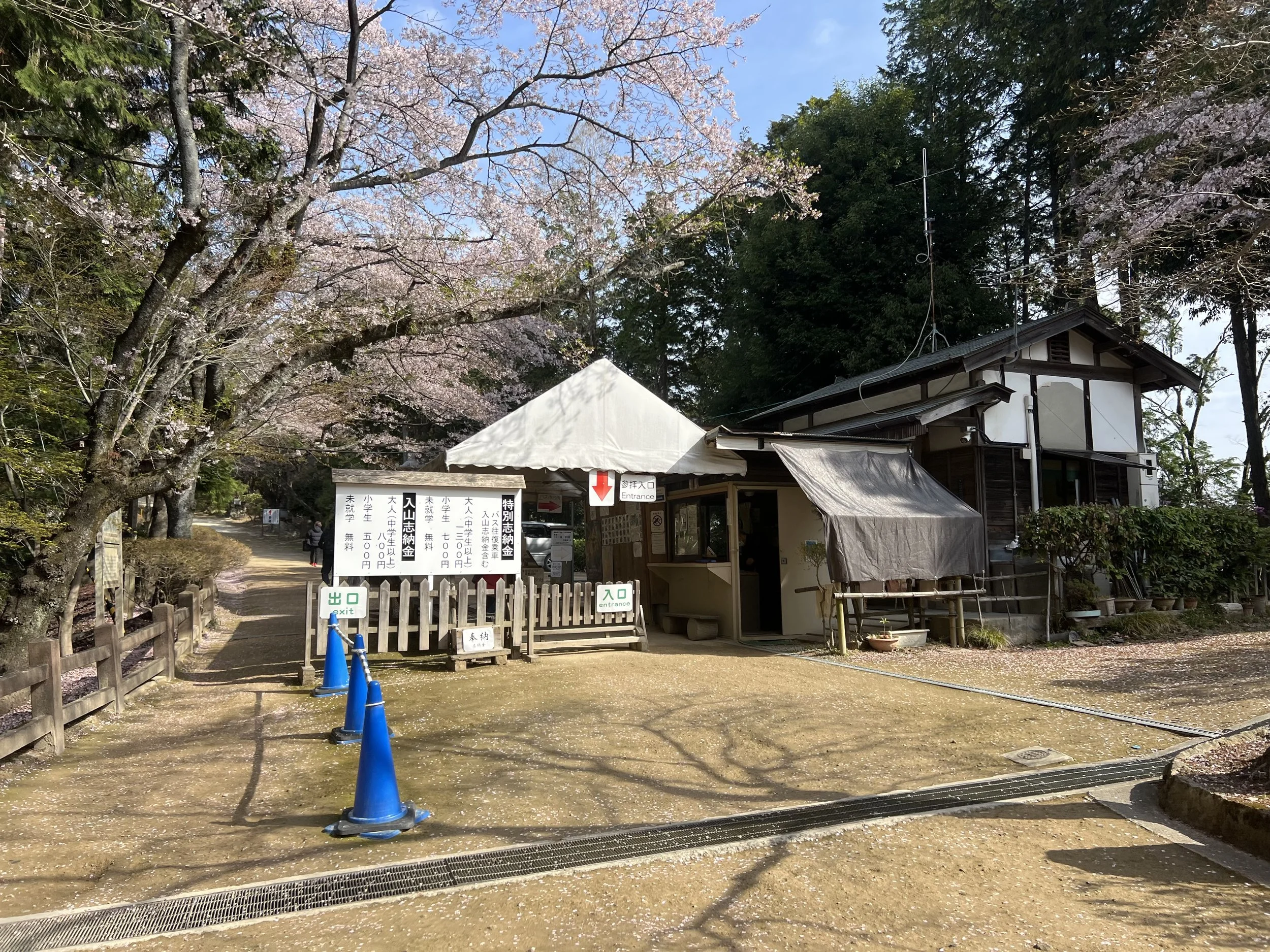
If you have difficulty getting around or prefer to avoid too much walking, a shuttle bus can take you to Maniden (departures every hour at 15, 38, 55 minutes past the hour; the round-trip is an additional ¥500); the bus stop is located just past the entrance, on the right.
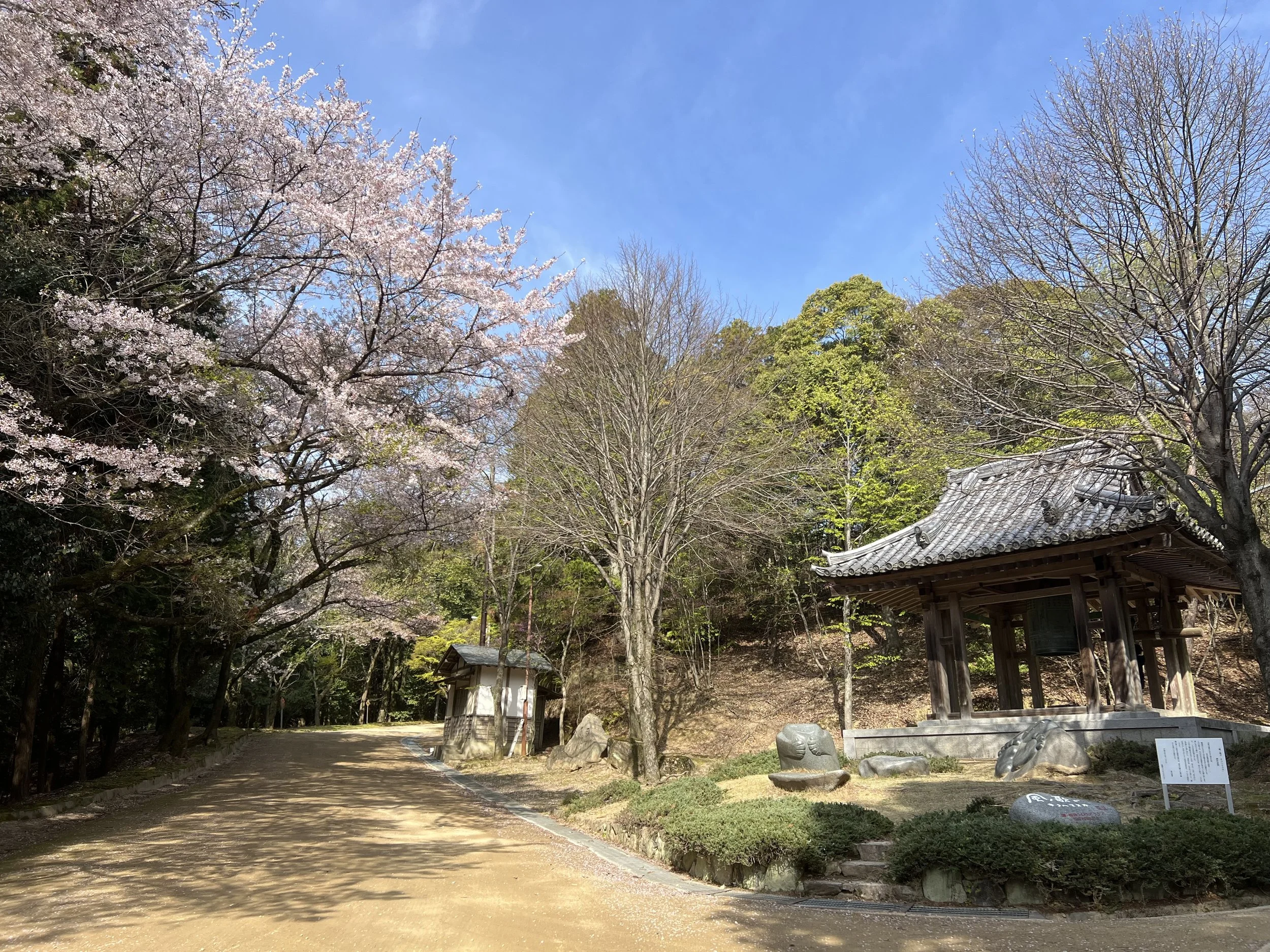
In my case, I chose to go on foot, a decision I was glad I made, as the path is charming, with flowering trees and 33 statues of Kannon along the way. The route passes by several of the temple’s structures, including the “Kokoro Bell” near the entrance (which visitors are free to ring) and further along the Niomon Gate, built in the early Edo period, with Nio guardian statues enshrined on both sides of the gate.
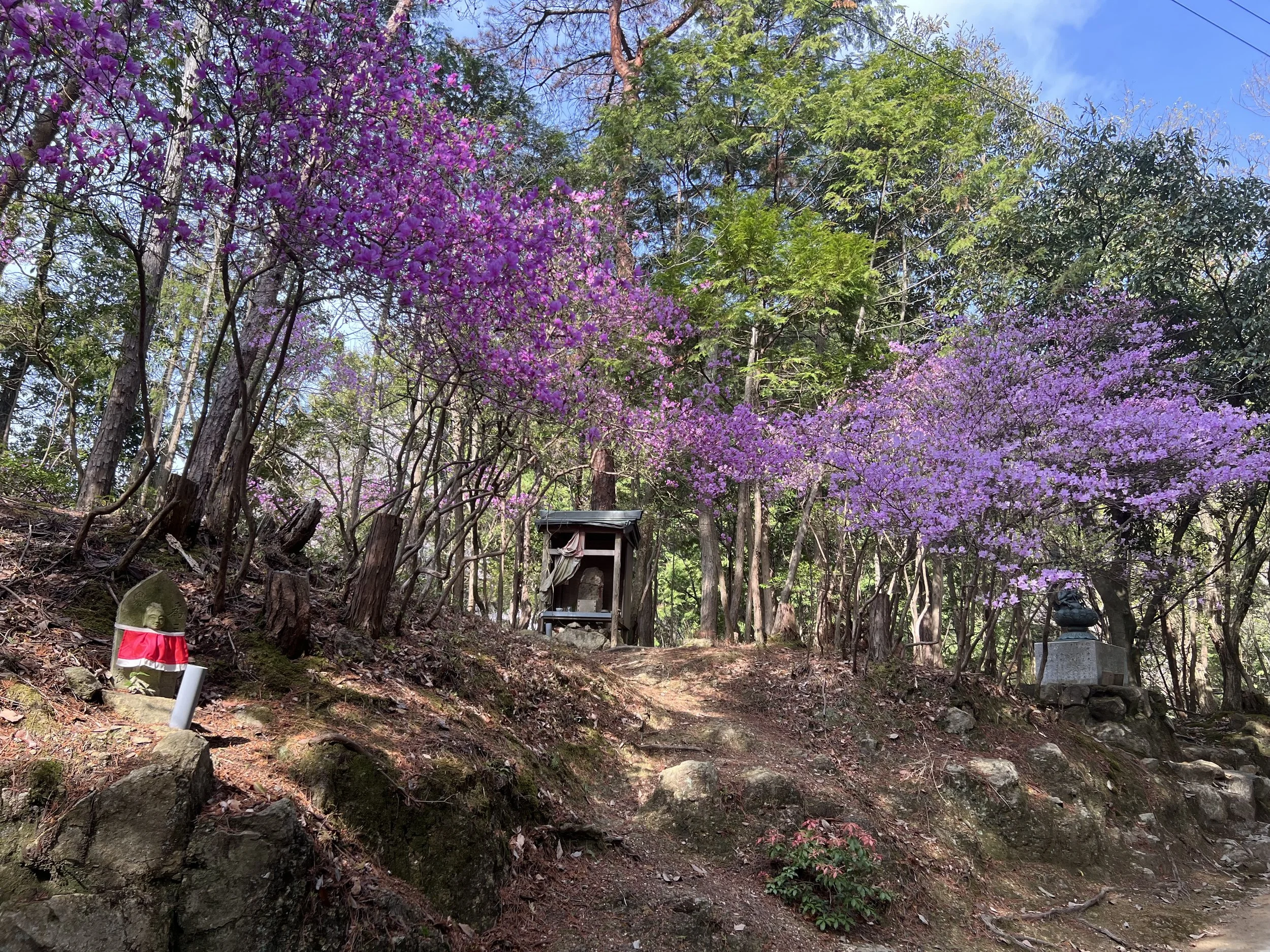
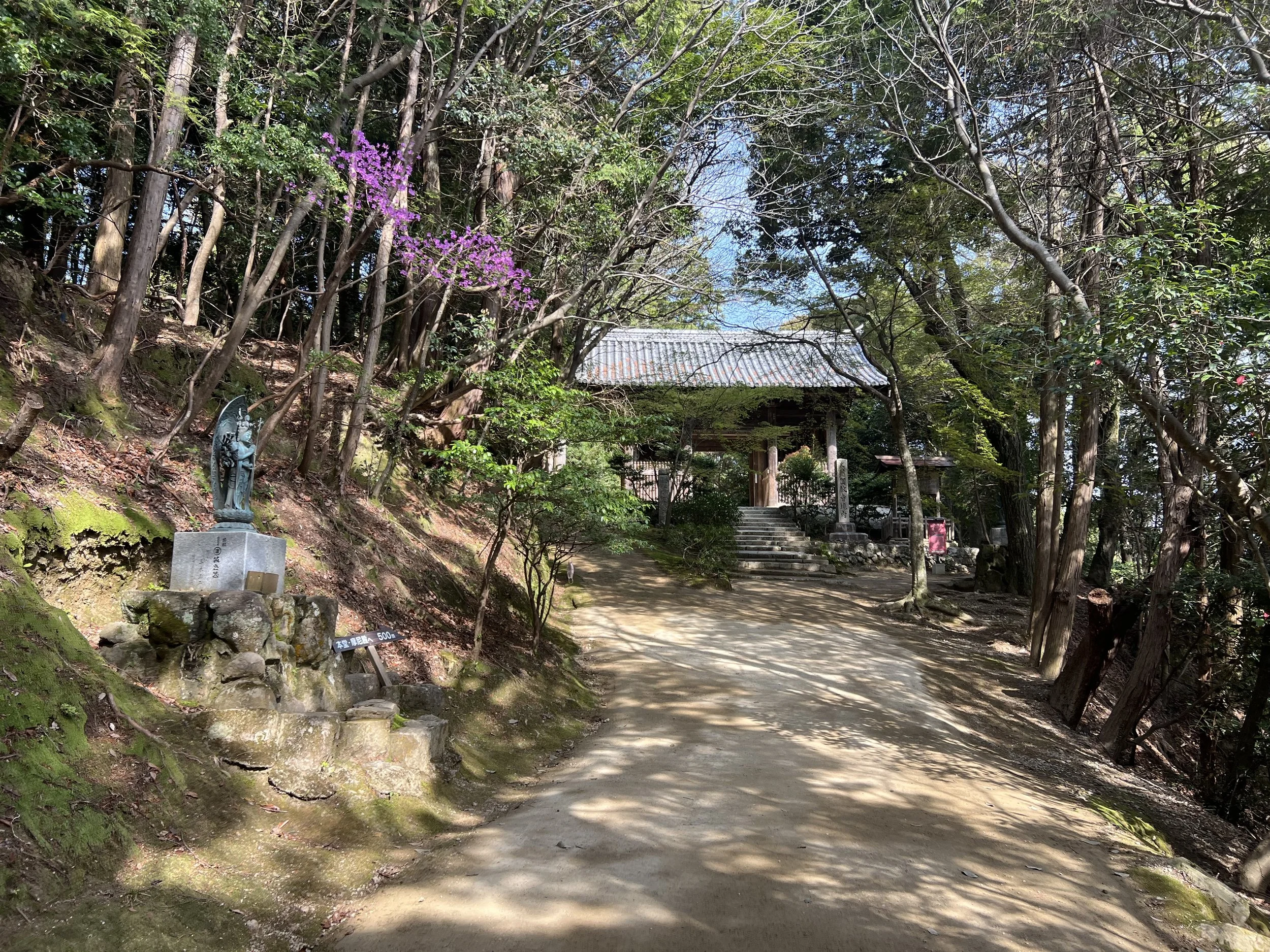
On this stretch, the path goes partly uphill but is not difficult. It takes about 15 to 20 minutes to walk from the ropeway station to Maniden temple, the first of the main buildings in the Engyo-ji temple complex. During my visit, there were very few people around (I arrived at around 9am), and I found the walk so refreshing and peaceful, especially after having experienced the crowds around Himeji castle the day before.
Admire and Visit the Maniden
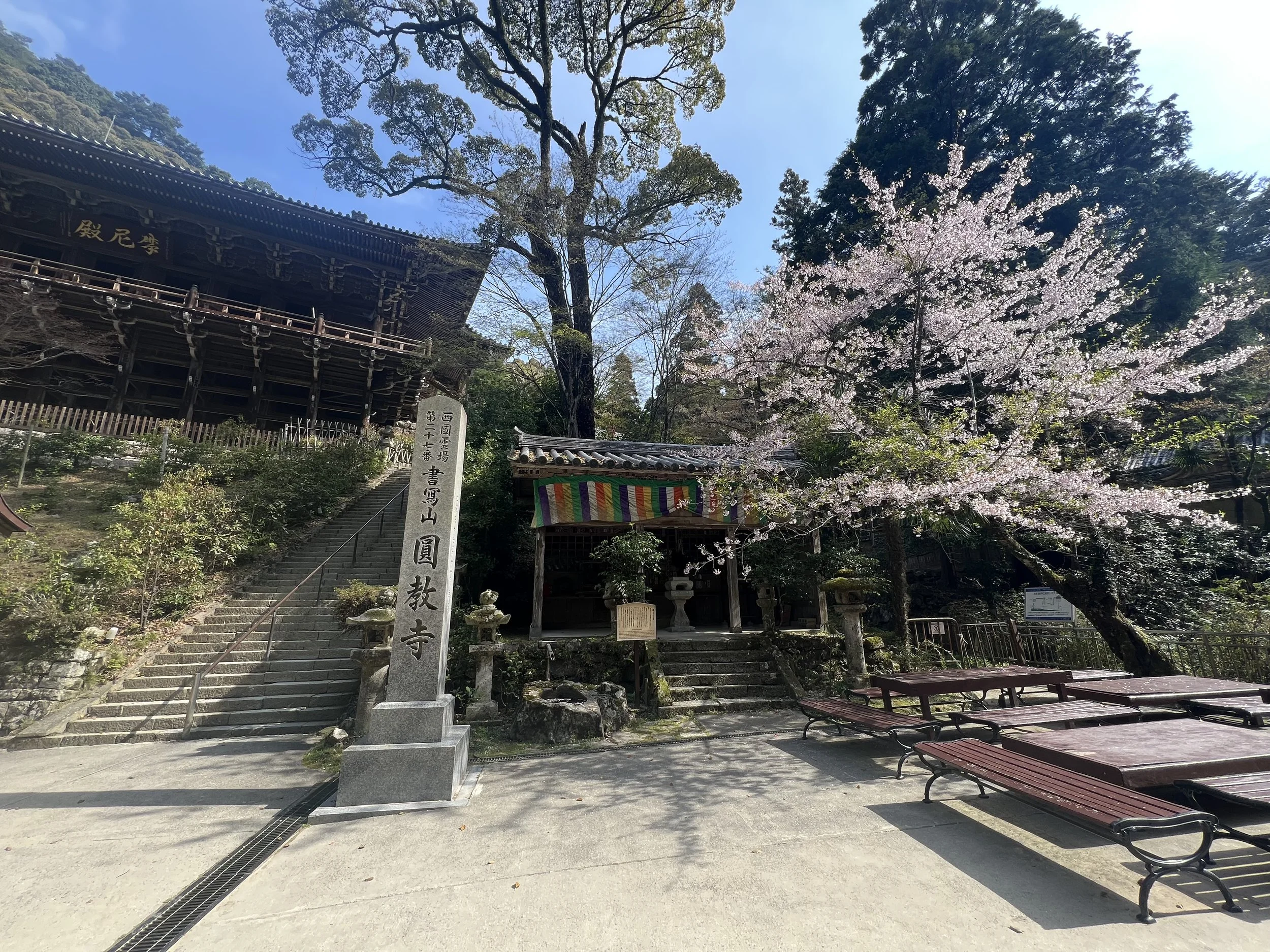
The Maniden (摩尼殿) is the building of Engyo-ji that impressed me the most; as this imposing structure stands halfway up the rocky mountain, supported by tall pillars. It’s in fact a reconstruction dating from 1933, as the original building, erected in 970, was destroyed by fire in 1921. The area is home to many Japanese maples (momiji), so it must be a stunning autumn foliage spot.
Before or after your visit to the temple, you might stop by the nearby teahouse called Hazuki Chaya. Please note that this is the only place on Mt Shosha that serves food and refreshments. It is open from 10:00 a.m. to 3:00 p.m., though these hours may vary. There are also a few tables set up in the vicinity, making it an ideal place to take a break.
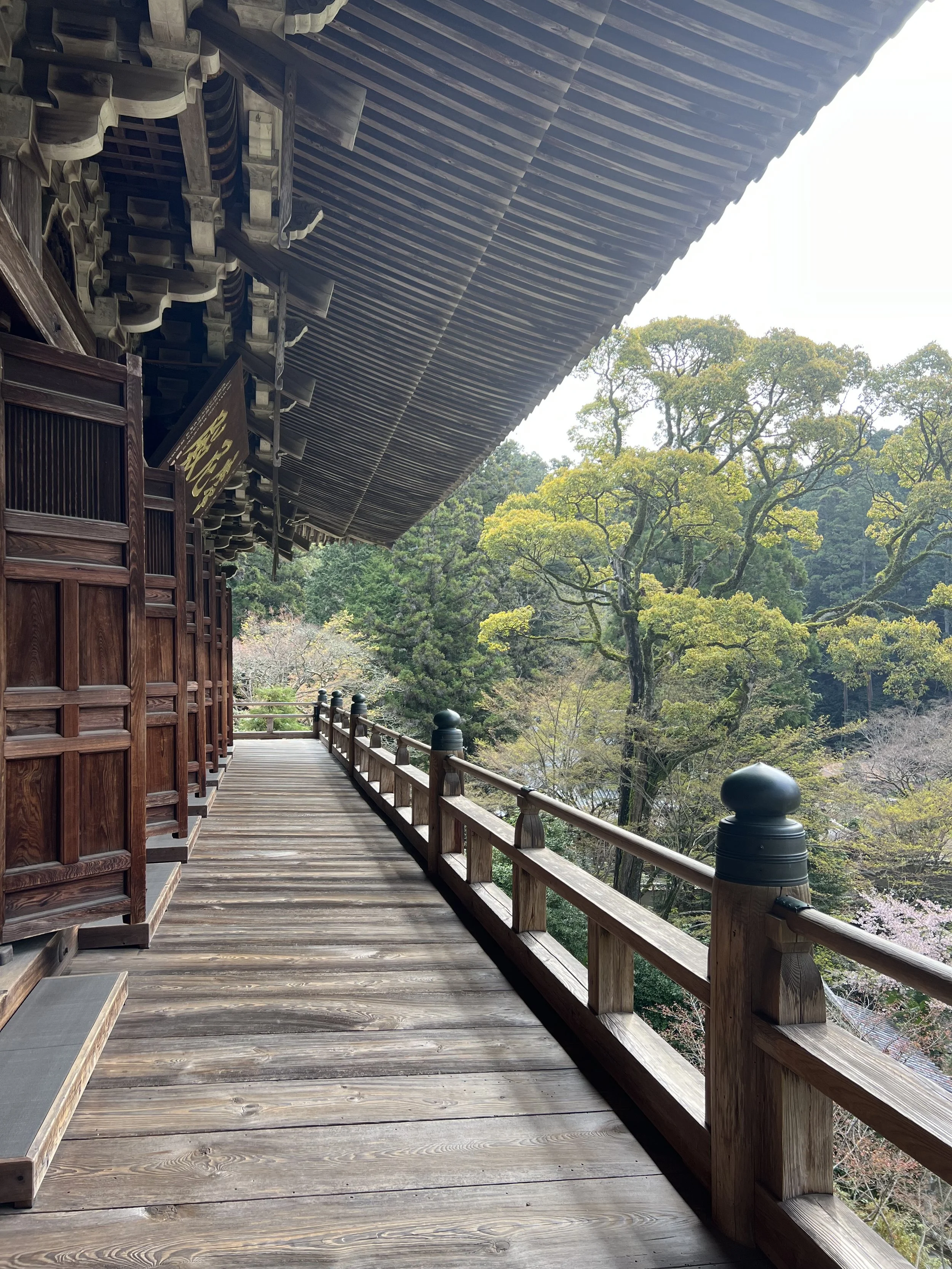
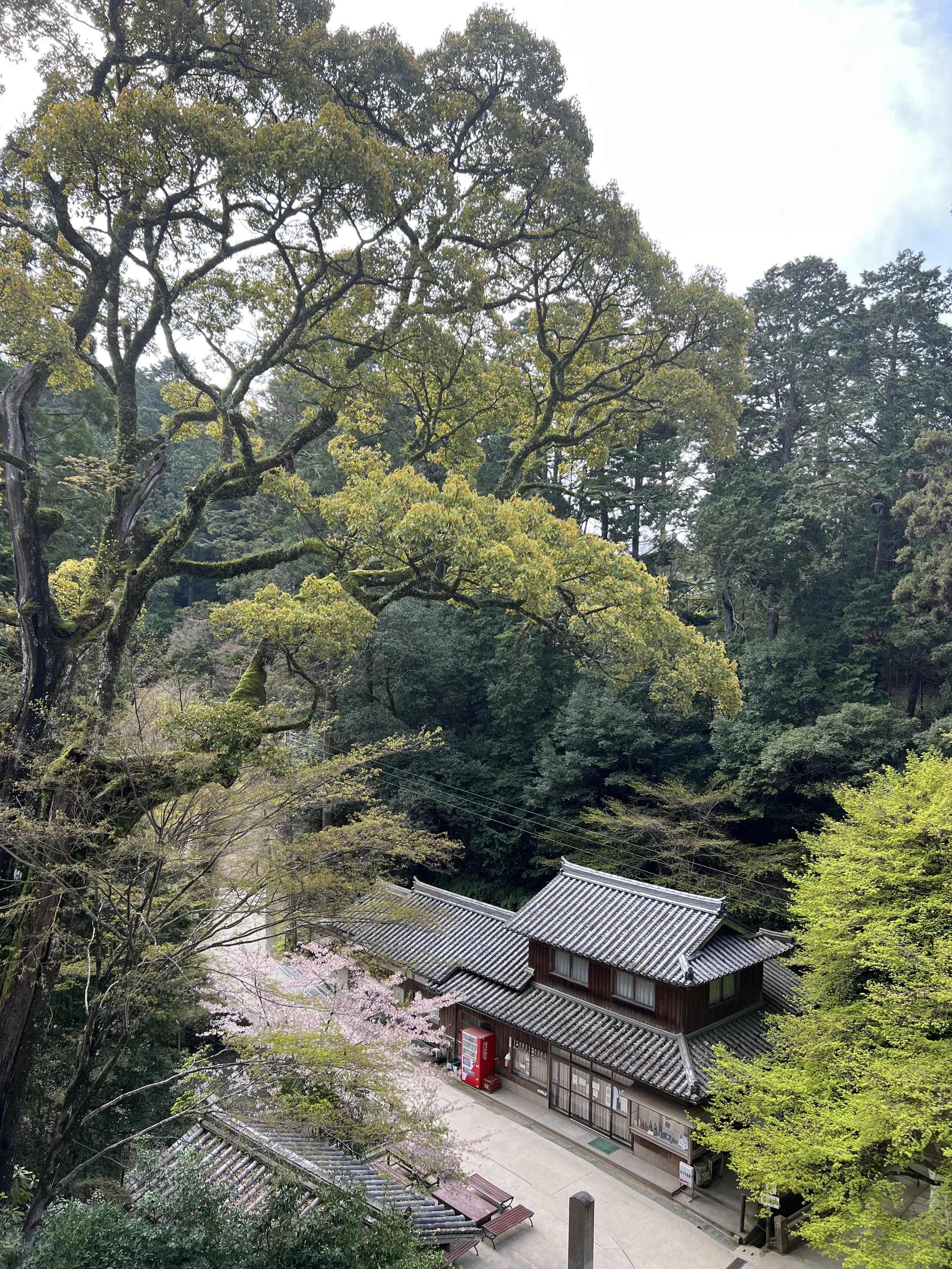
View of Hazuki Chaya Teahouse from Maniden
Walk to Engyoji’s Three Main Halls
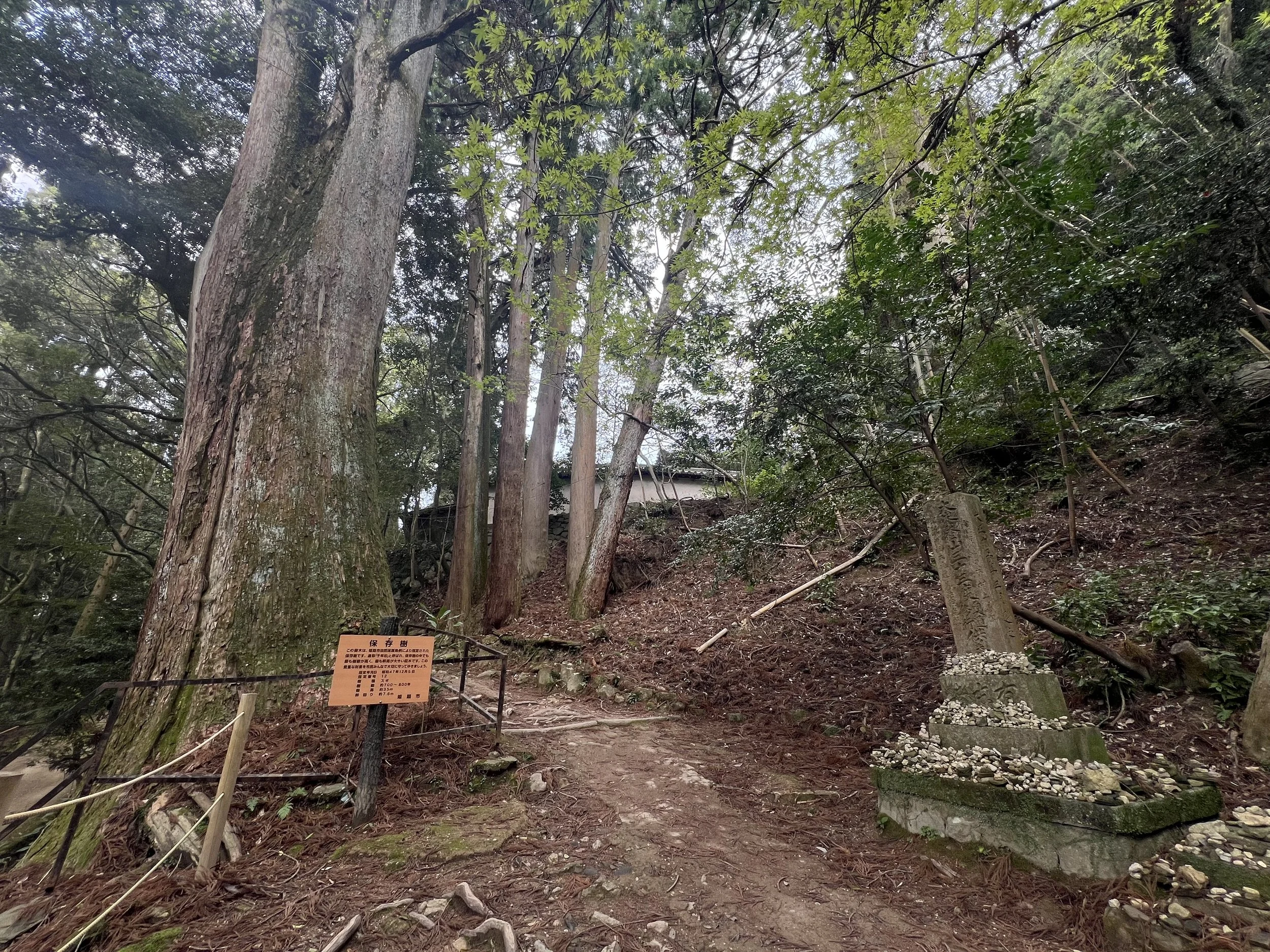
From Maniden, it’s only a 5-min walk to reach Jogyodo, Jikido and Daikodo, Engyoji Temple’s three main halls. Along the way, you will pass a Daibutsu (Great Buddha) statue, and a monumental cedar tree standing 35 meters tall (with a diameter of 8.4 meters) and about 700 years old.
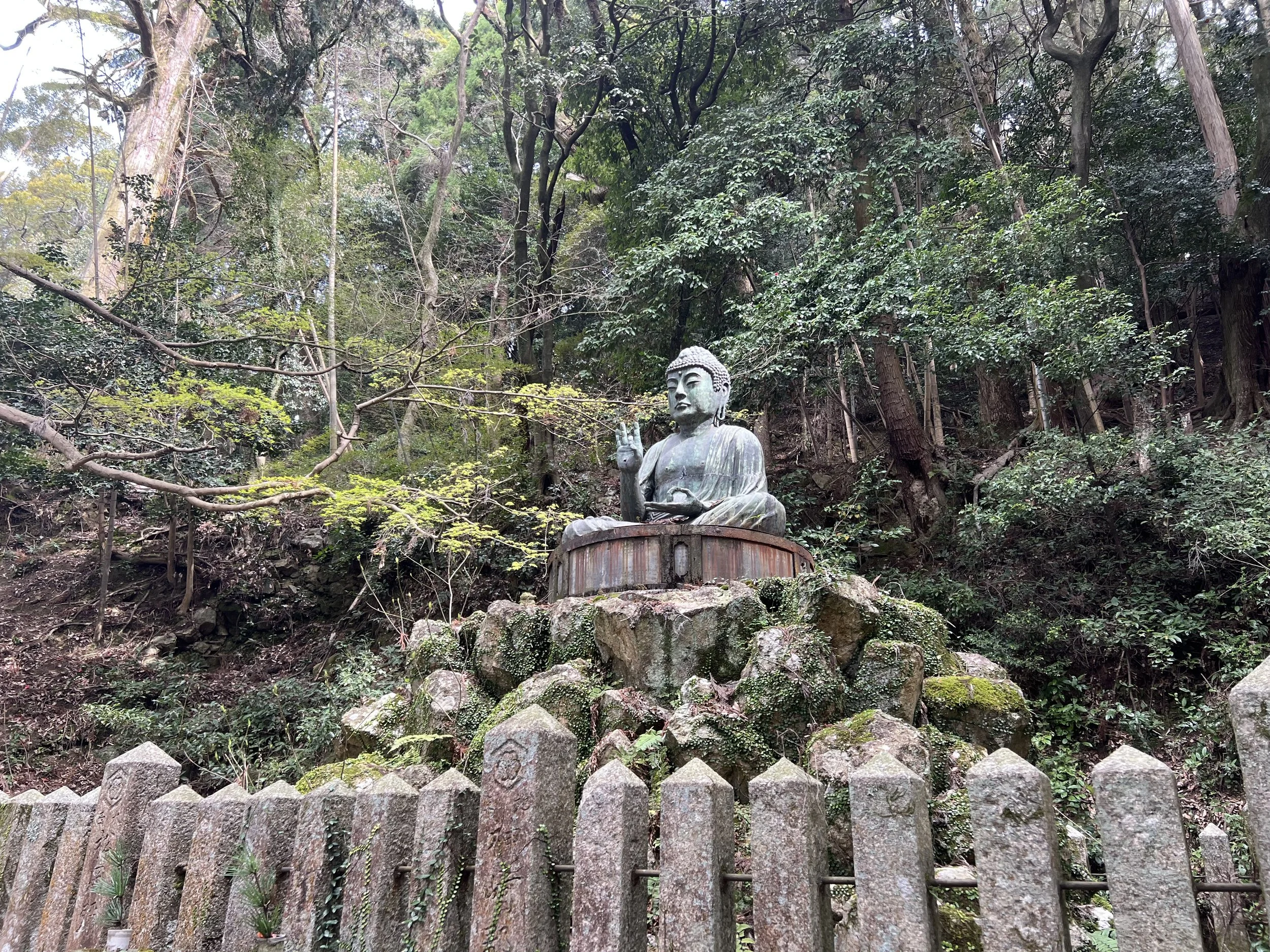
Laid out in a U-shaped arrangement, the Three Halls (called Mitsunodo) are Engyoji’s main halls. Daikodo was once the main hall of Engyo-ji, and is famous as a learning and training center for monks, Jikido was originally used as a dormitory for monks in training, while Jogyodo is the training hall for the practice of hall of walking meditation. They have also been used more recently for filming movies and dramas.
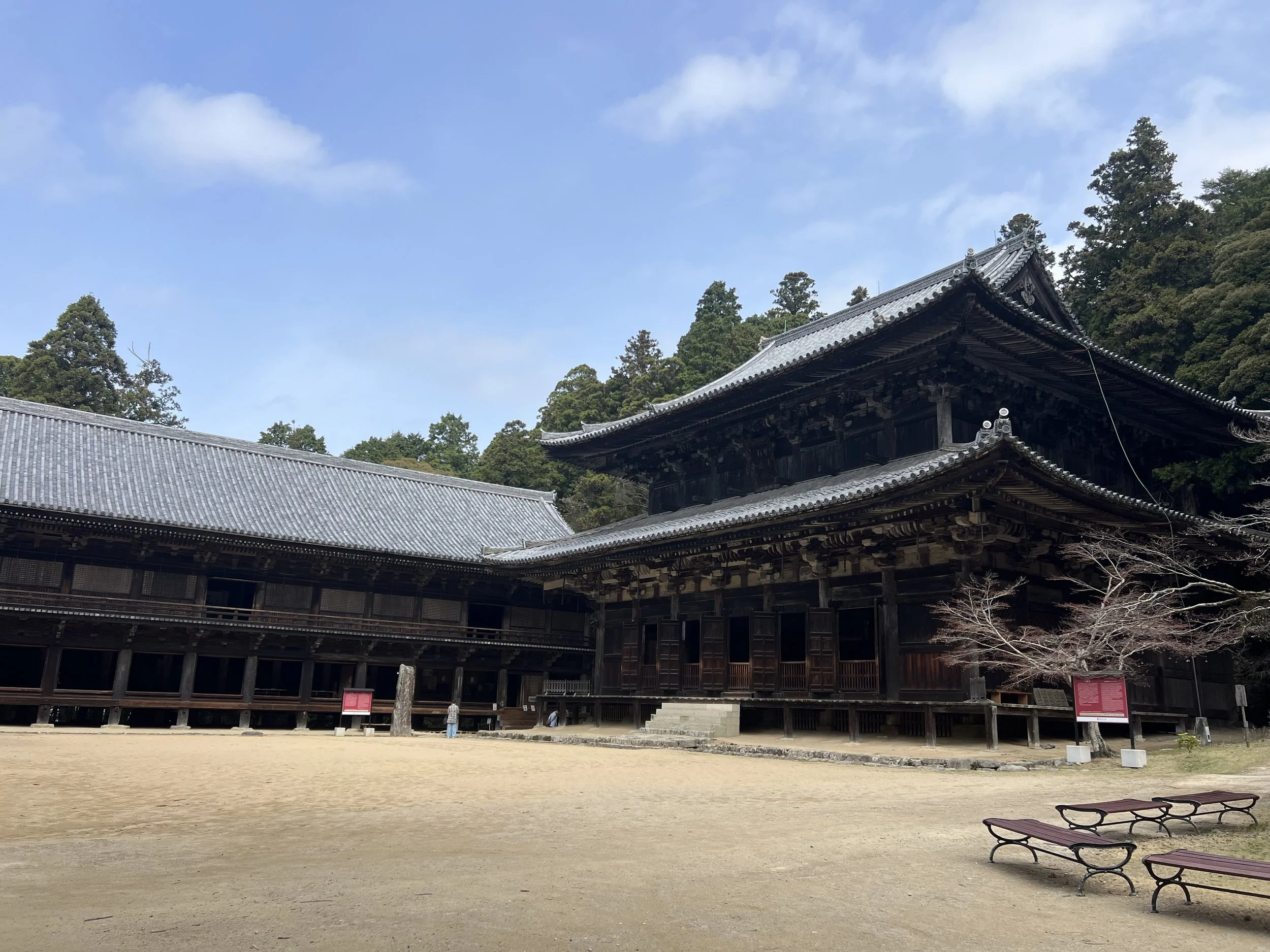
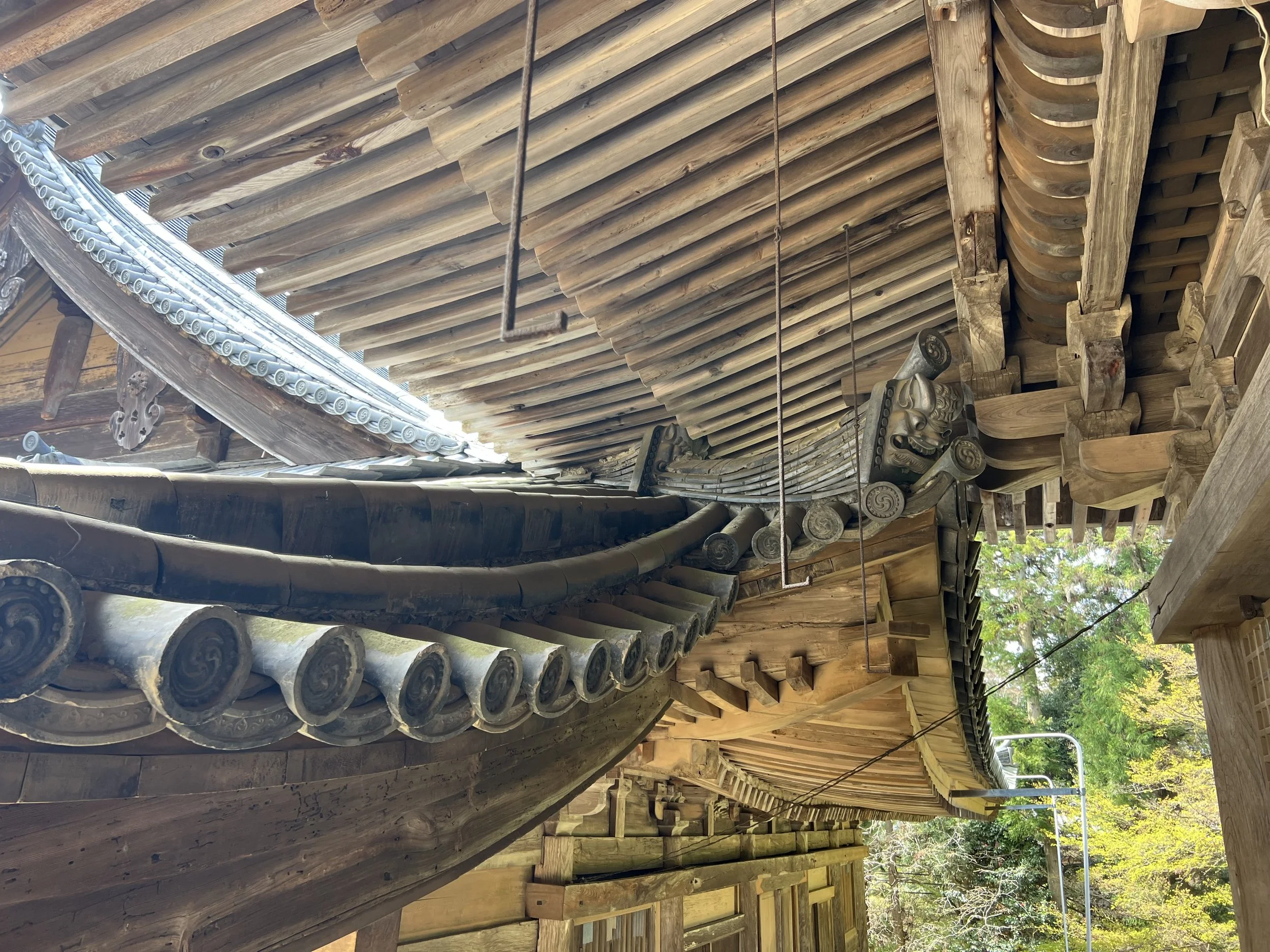
A fun fact about Jikido is that it underwent several phases of construction, and from the fifteenth century onwards, it remained largely unfinished for nearly five centuries, with the second floor only being completed in 1963. This has resulted in a discrepancy between the original design and the final execution—a detail that can be observed where one corner of the Jikido meets the roof of the Jogyodo (see the image below).
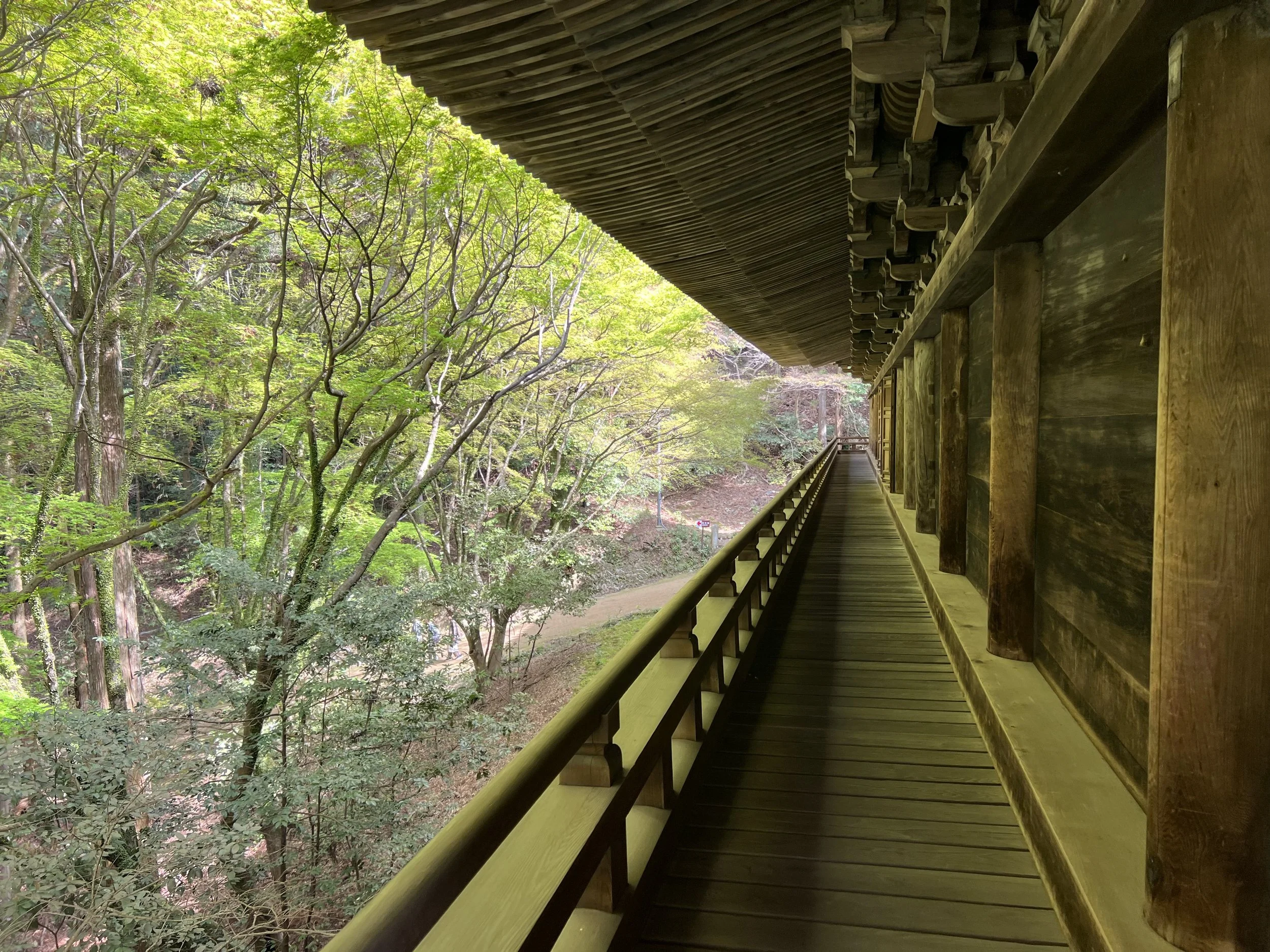
Today the Jikido’s first floor is used as a space where visitors can practice copying sutras. I also highly recommend to visit the second floor where numerous religious and cultural artifacts are on display.
Continue to the Inner Sanctuary of Engyoji
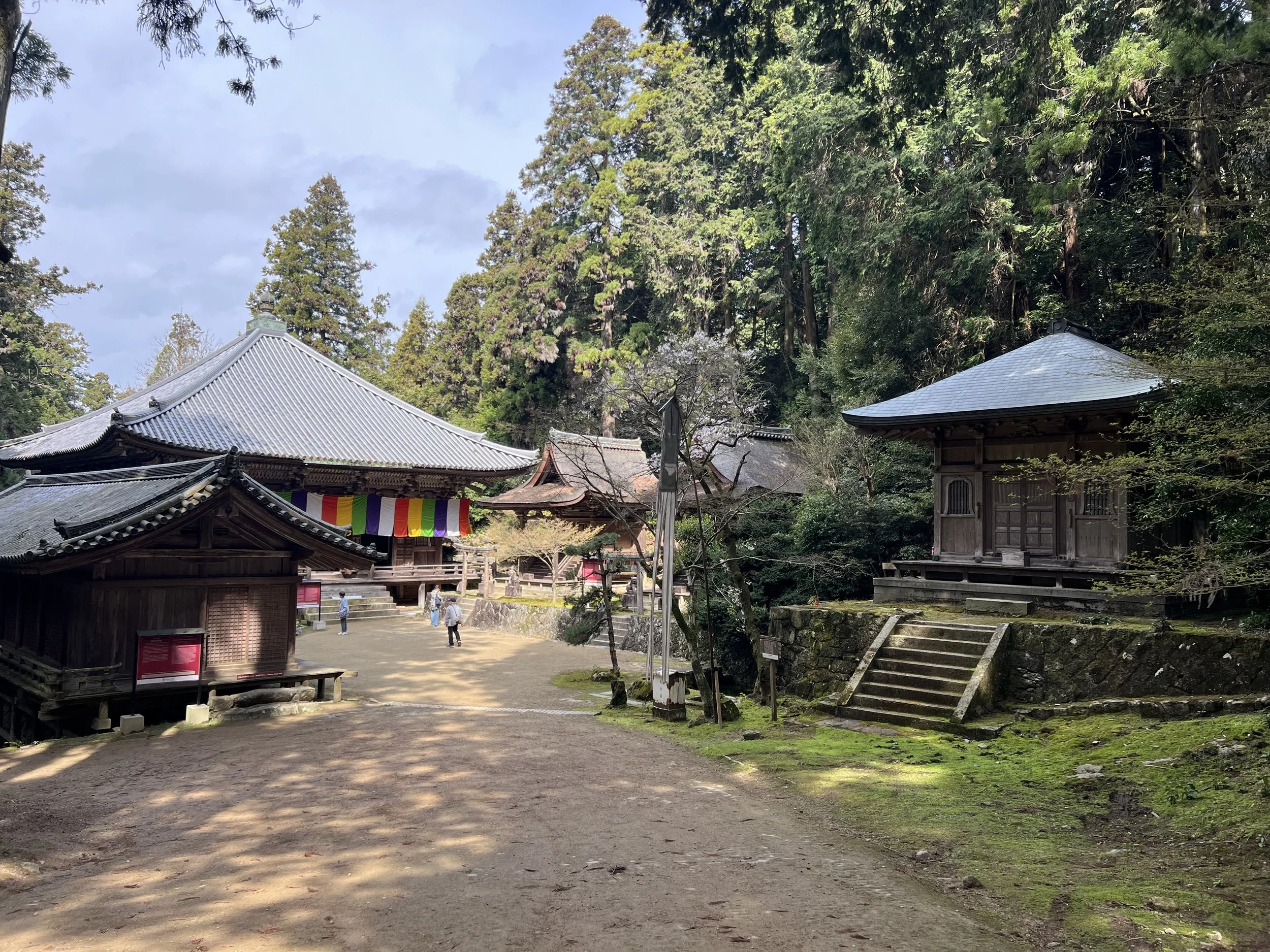
Just a few minutes’ walk from the Three Halls, be sure not to miss the Kaizando. Part of the Inner Sanctuary, this hall is where Shoku Shonin, the founder of Engyoji temple, is enshrined. Here are two interesting facts I learnt about the Kaizando:
the pavilion houses an eternal flame kept burning as a symbol of the 1,000-year history of Mount Shosha.
in the past, four sculptures of sumo wrestlers, created by the legendary sculptor and carpenter Hidari Jingoro, adorned the four corners of the roof. According to legend, the wrestler at the northwest corner could no longer bear the weight and fled, leaving only three remaining.
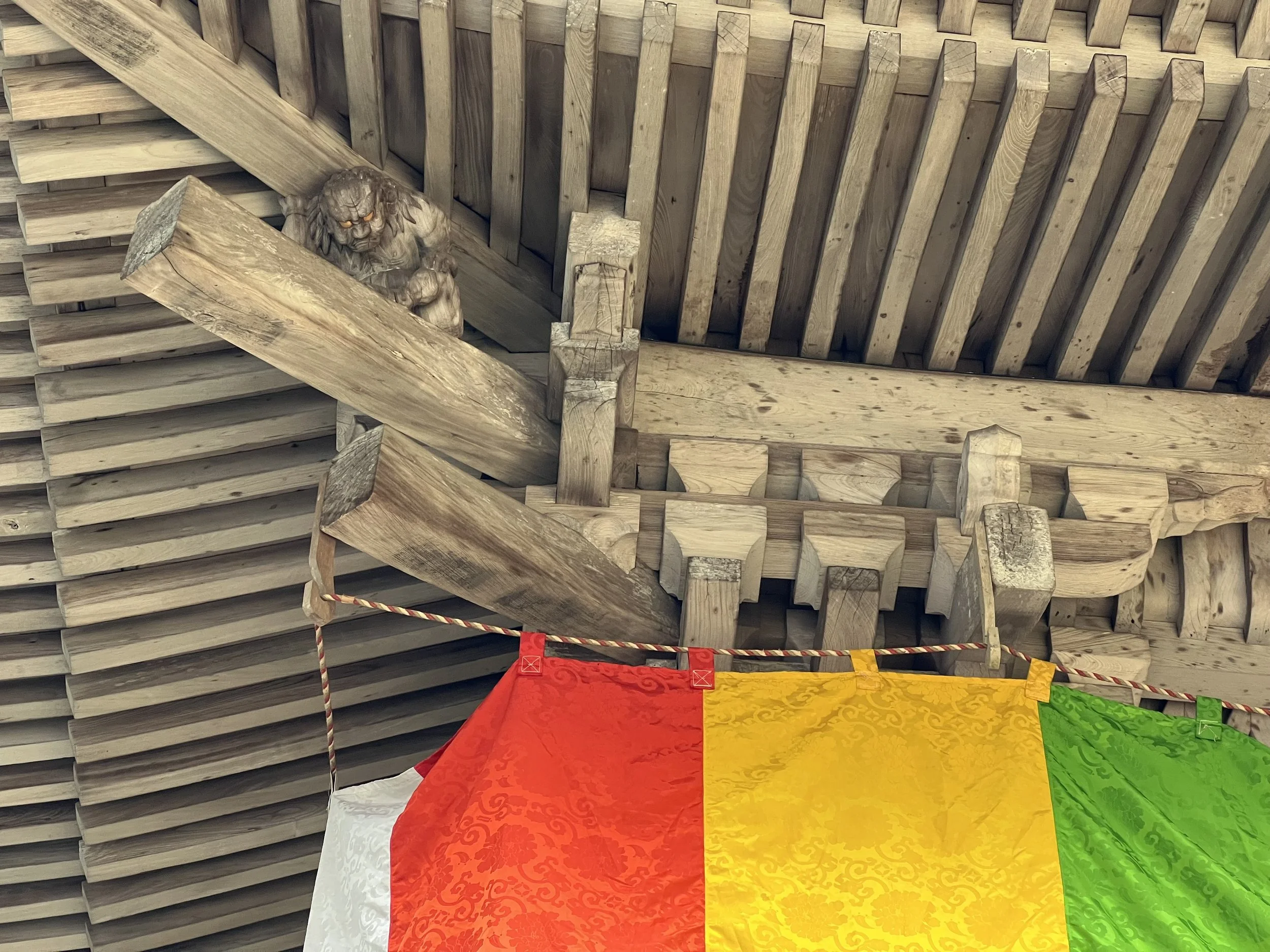
One of the sumo wrestlers by Hidari Jingoro
Explore the Rest of the Temple Complex Back to the Ropeway Station
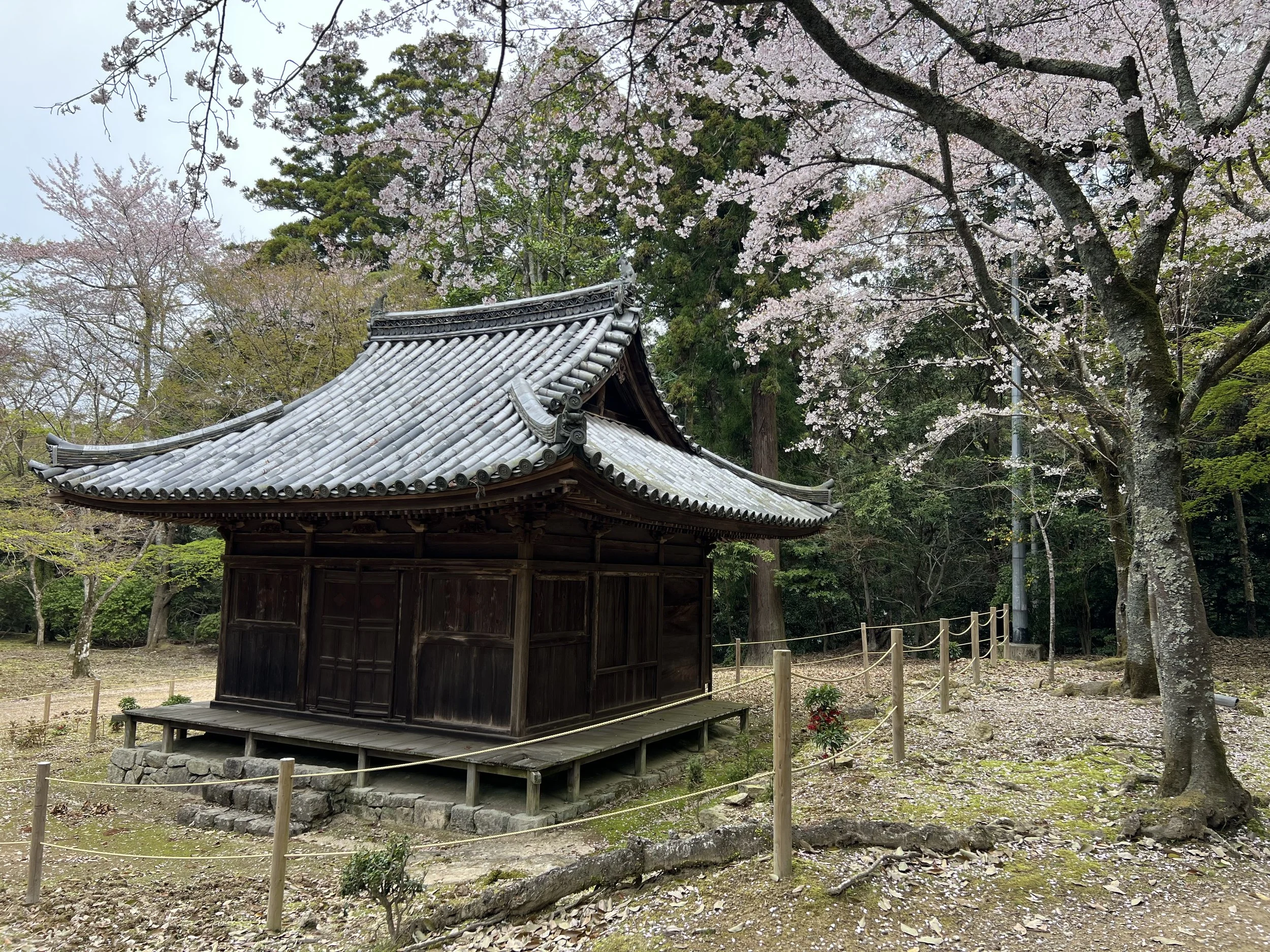
Kongodo
There more temple buildings, mausoleums and tombs to be found here, so you can continue exploring Mt Shosha at your own pace. I was alone as I walked along the path connecting Kongodo to Maniden, and it was such a serene, memorable moment that it is hard to put into words. One thing is certain: I had absolutely no regrets about coming to explore Mt Shosha!
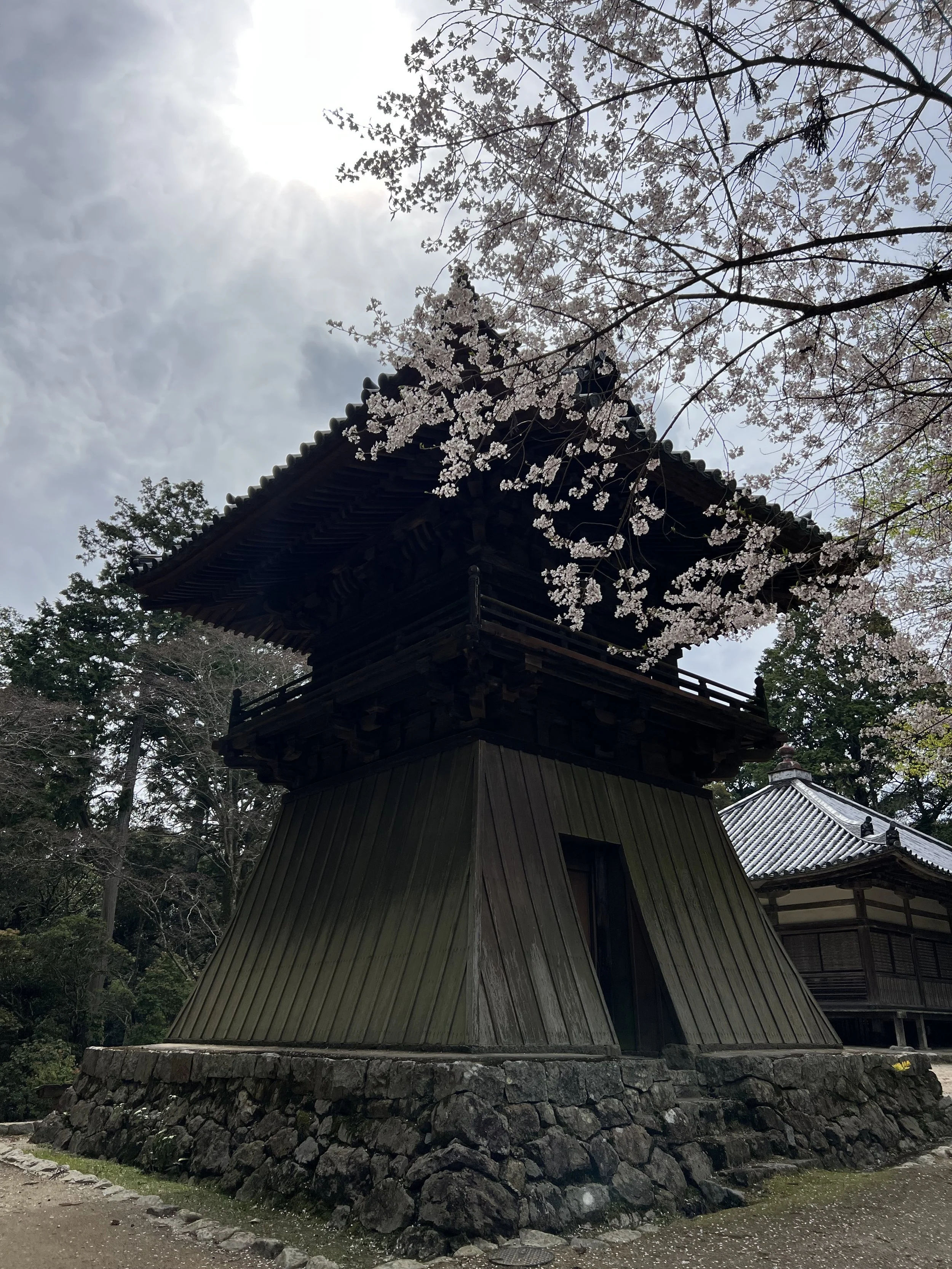
Shoro
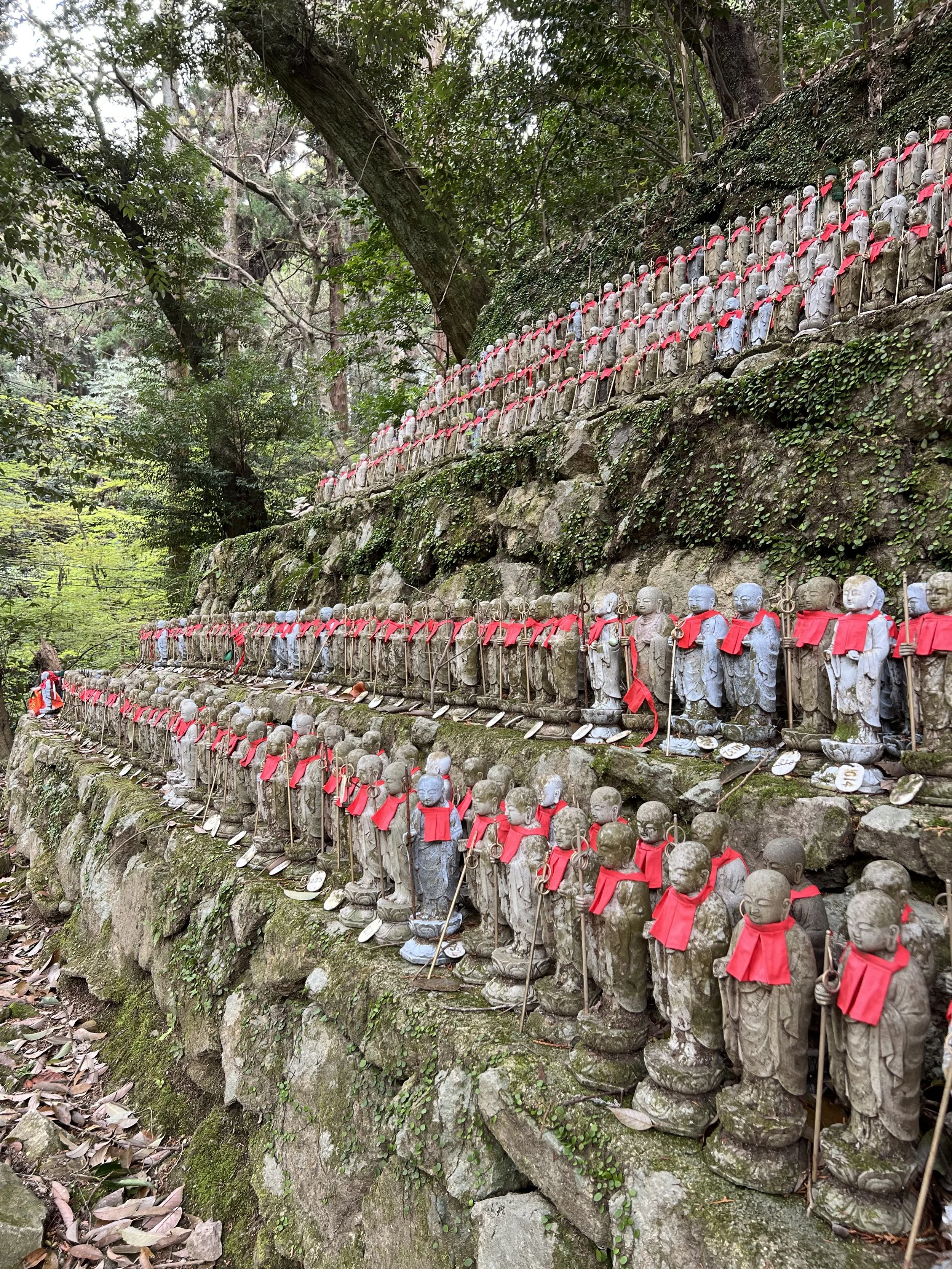
I then slowly made my way back toward to the ropeway station, retracing the route I had taken earlier to return to Himeji station. From there, I then continued my adventure over the next days by exploring lesser-known corners of Nara prefecture, like the Yamanobe no Michi Trail, which I cover in detail in my dedicated guide, available here.
A Few Tips to Know Before Going to Mount Shosha
Bring cash with you, as card payments are not accepted for Engyo-ji temple admission or the shuttle service.
Be sure to pick up a map of Engyo-ji temple complex at the ropeway station or the temple entrance.
On Mount Shosha, you will find a few vending machines for drinks, but food options are limited to Hazuki Chaya, so I’d recommend bringing some snacks along with you, just in case.
Instead of taking the ropeway, it is also possible to reach the entrance of Engyo-ji on foot. The trail nearest to the ropeway station can be found on Google Maps as Higashisaka road (書写山東坂登山口). According to reviews, the ascent takes 40 min to 1 hour. I haven’t done this hike myself so I cannot shared any personal account on the trail, but I thought it might be of interest to some of you.
Planning Your Stay in Himeji? My Hotel Picks
One of my friends warmly recommended Hotel Monterey Himeji. This superb hotel with large and comfortable rooms is located near the shinkansen station, with a magnificent view of the city and the castle. Breakfast is served on the highest floor and is a gigantic buffet with lots of local specialities. Free coffee is also available at any time of day. Although the sento isn't very big, it's a pleasure to have after a day of exploring. Moreover, because the hotel is also used for weddings, it has a bit of a “princess castle” atmosphere.
For a bit more budget-friendly option, I also recommend Dormy Inn Himeji, where I stayed at during my last trip to Himeji. It offers excellent value for money, with a great rooftop onsen (and usually complimentary ice-cream to enjoy after the onsen) and free late-night ramen. I’m a big fan of this hotel chain and have stayed at Dormy Inn hotels across Japan many times.
Looking for more accommodation options in Himeji? If you’d like to go off-the-beaten-path and stay in a traditional ryokan in the countryside, an interesting option is Yumoto Ueyama Ryokan. It's about a 35-minute drive from Himeji station (accessible by bus or taxi), and the ryokan also offers a free shuttle service once a day. Set in the middle of nature, with indoor and outdoor onsen baths, based on reviews, it looks like a very charming place to stay at.
To Conclude
I love hiking, ancient temples, cinema and viewpoints, so no wonder Mt Shosha had been on my Japan travel bucket list for a long time. My visit didn’t disappoint, on the contrary! It was a memorable half-day trip from Himeji, and another destination that confirmed once more how rewarding it is to go off-the-beaten-path in Japan. If you’re planning a stop to visit Himeji castle, why not adding this fantastic excursion to Mt Shosha?
➡️ Read my travel guide on Himeji.
Planning to visit Japan during the sakura season? Check out more of my cherry blossoms and spring guides.
Found this article helpful? Buy me a coffee. 😊
Want to stay in touch? Subscribe to my monthly newsletter (with latest articles, updates, travel tips and more...) delivered straight to your inbox. 📩
Some of the links in this Mt Shosha article are affiliate links. At no extra cost to you, I may earn a small commission when you click on them and make a purchase. And if you do, thanks for your support! Purchasing through these links is a great way to support Travely Notes, as this helps with the costs of running my blog.



Just a short 30-minute train ride from Kyoto, Uji offers a perfect escape for those looking to immerse themselves in Japan’s cultural heritage and indulge in its most iconic tea—matcha! Famous for its ancient temples, serene river views, and rich tea culture, Uji is an underrated day out for Japanese history and culture enthusiasts, and should definitely be on the travel bucket list of matcha lovers.