
Visiting Shirakawa-go in Winter: A Practical Guide to Japan’s Snowy Village
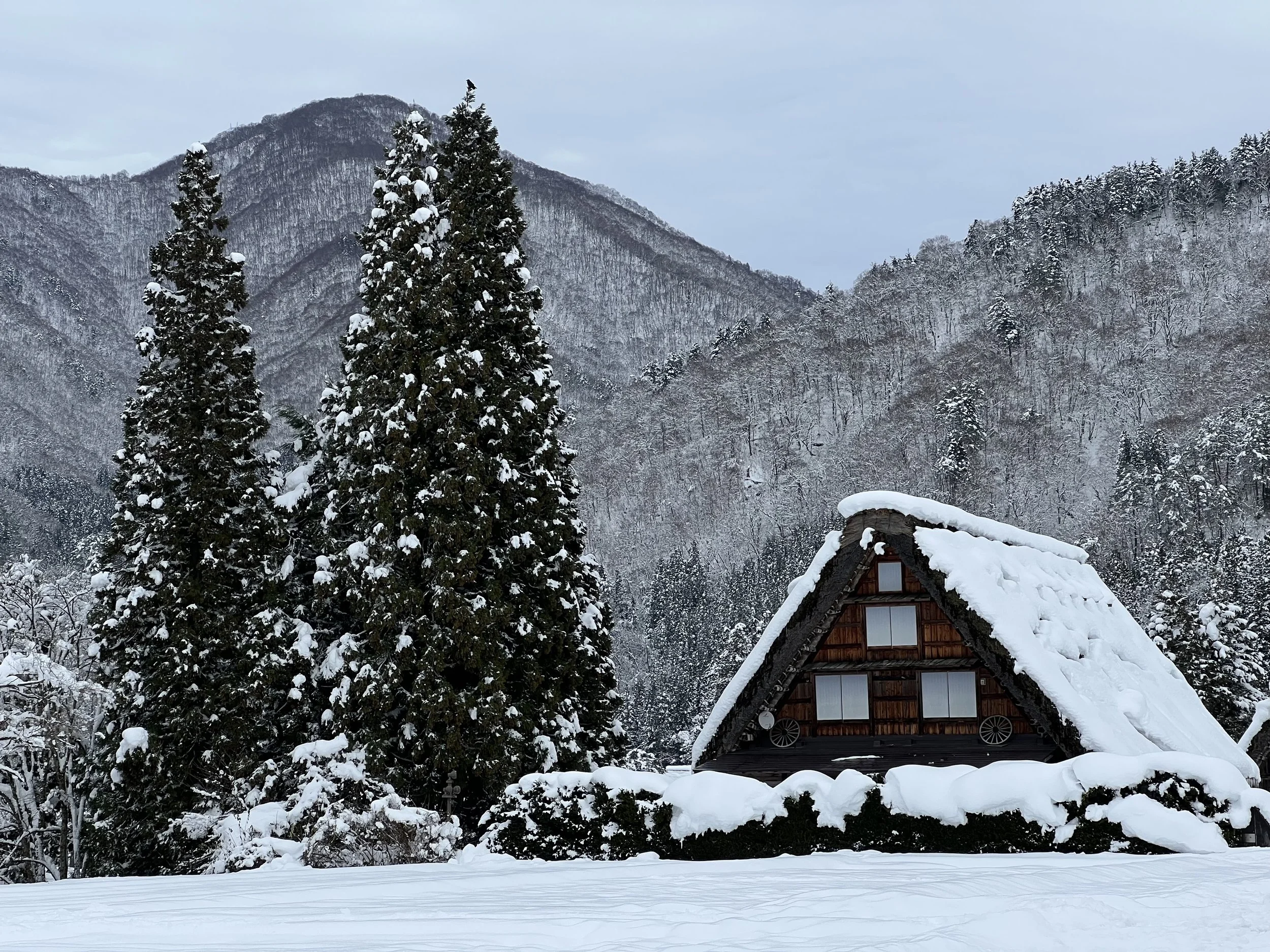
Shirakawa-go (白川郷) is a beautifully preserved traditional village tucked away in Gifu Prefecture in central Japan. Registered as a UNESCO World Cultural Heritage Site in 1995, it is best known for its gassho-zukuri farmhouses (traditional wooden houses with steeply thatched roofs designed to withstand heavy snowfall) and for its charming winter scenery.
Seeing Shirakawa-go covered in snow is one of the most beautiful sights I’ve experienced in Japan, and honestly, one of the most magical places I’ve ever visited. Walking through the village felt like stepping straight into a fairytale, with snow blanketing rooftops, footpaths, and rice fields.
In this guide, I’ll share my winter day-trip experience, with my favorite places to see in Shirakawa-go and things to do during the snowy season, as well as practical tips to help you plan your own visit to this unforgettable village.
Explore Shirakawa-go With Me: Favorite Places to See and Things to Do in Winter
I visited Shirakawa-go on a winter day trip from Takayama, which is one of the most convenient and popular ways to reach the village. After arriving by bus, I immediately felt the atmosphere shift, with everything slower and beautifully blanketed in snow.
Shiroyama Tenshukaku Observation Deck
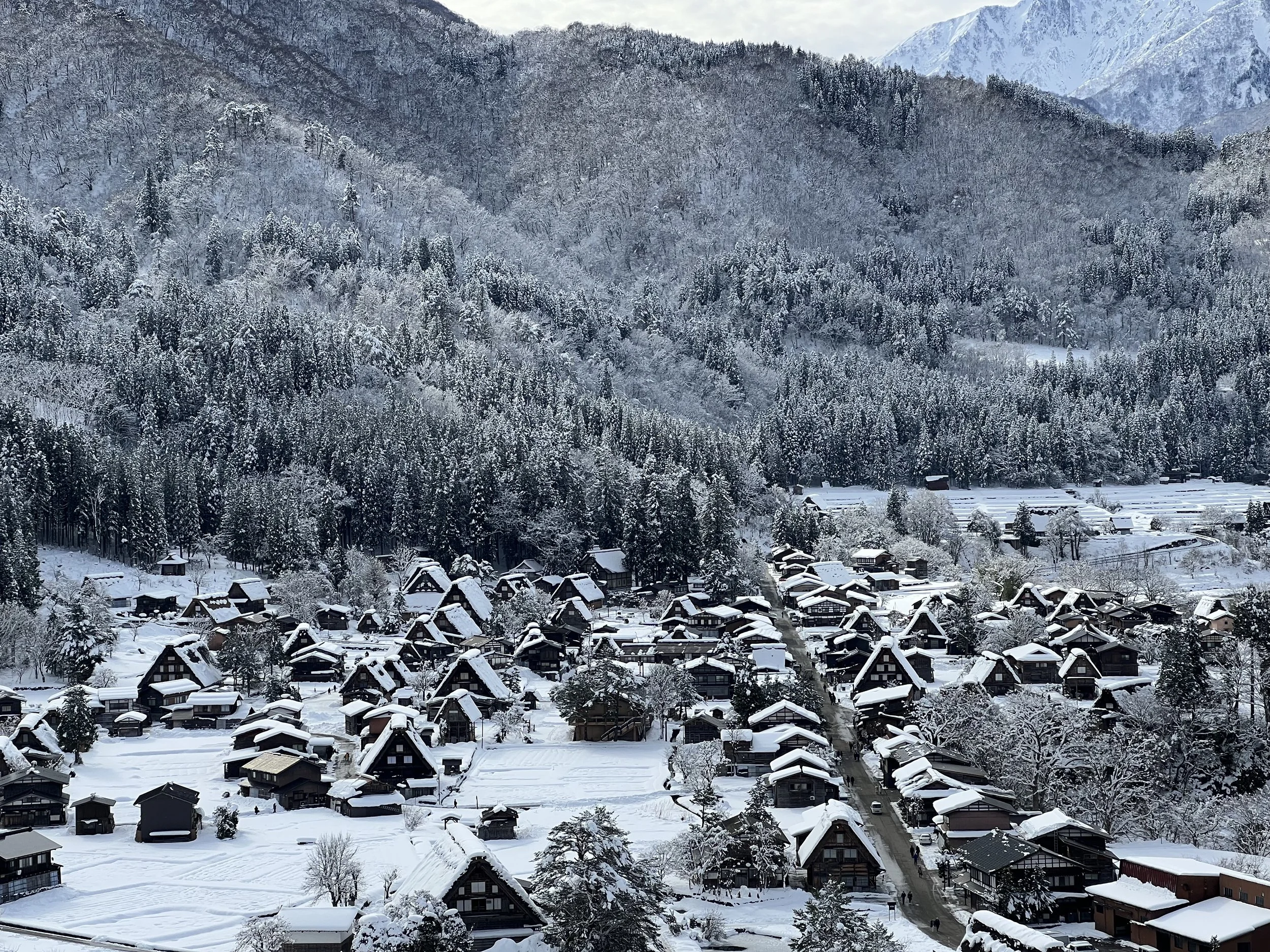
As soon as I arrived, I headed straight to the Shiroyama Tenshukaku Observation Deck (城山天守閣 展望台) for a panoramic view of the village.
The walk from the bus station takes about 15 minutes uphill, but there’s also a shuttle bus available for a small fee. I chose to take the shuttle up and walk back down afterward, which worked perfectly.
From the observation deck, you get a breathtaking view of Ogimachi village, with snow-covered rooftops neatly arranged along the river. It’s the perfect first stop, as it gives you a clear sense of the village layout and its surrounding mountains. On a snowy day, the view felt especially magical and calm.
Wandering Through Ogimachi Village
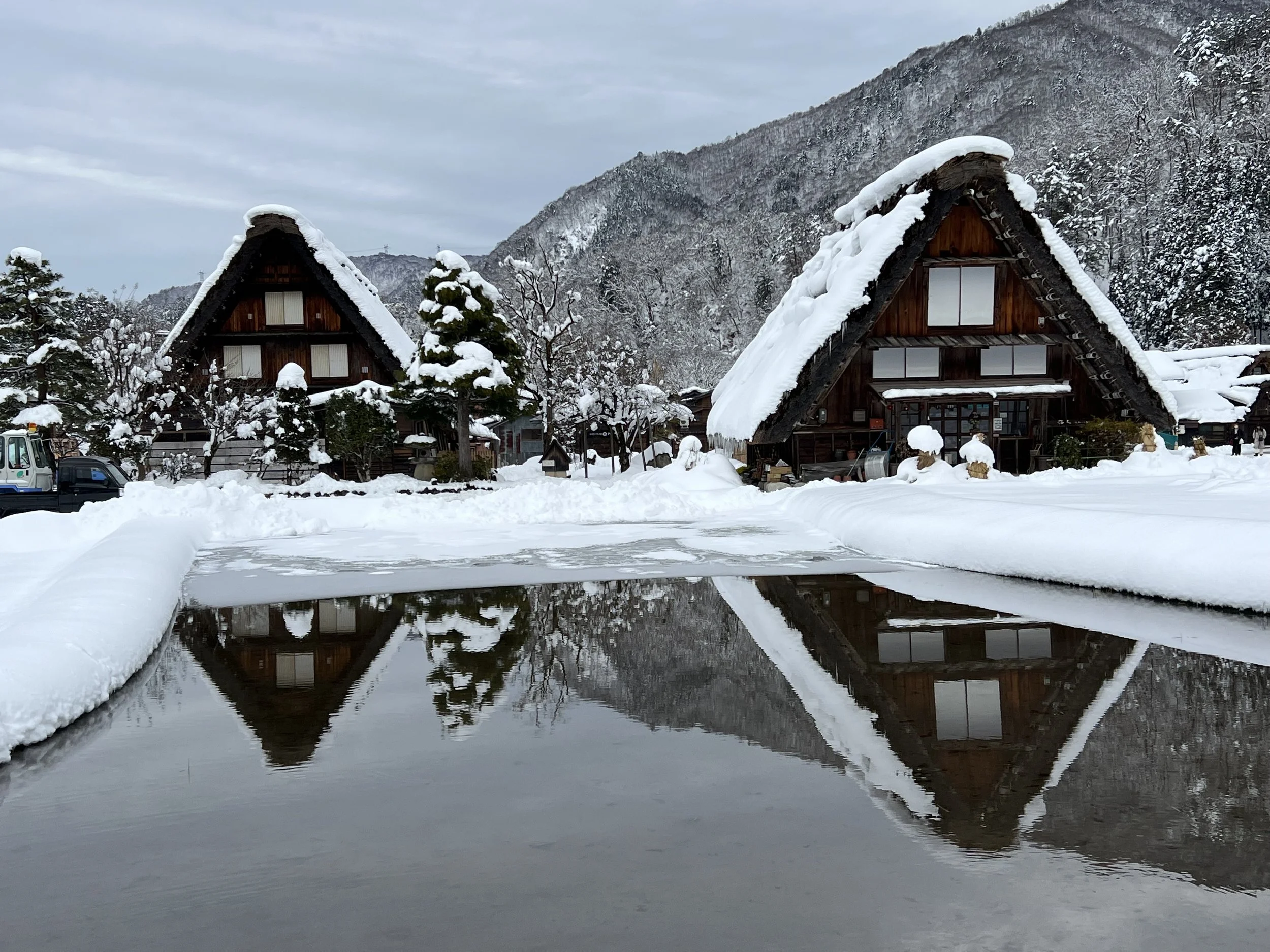
Back in the village, I spent time wandering through the streets of Ogimachi (荻町), following small snowy paths between traditional houses streams and rice fields.
Some of the gassho-zukuri houses are open to the public, including Wada House (和田家住宅) and Kanda House (神田家). Entrance costs around ¥400 per house, and if you have time, I’d strongly recommend visiting at least one. Seeing the interior gives you a much better understanding of how these homes were built and how families lived in such harsh winter conditions.
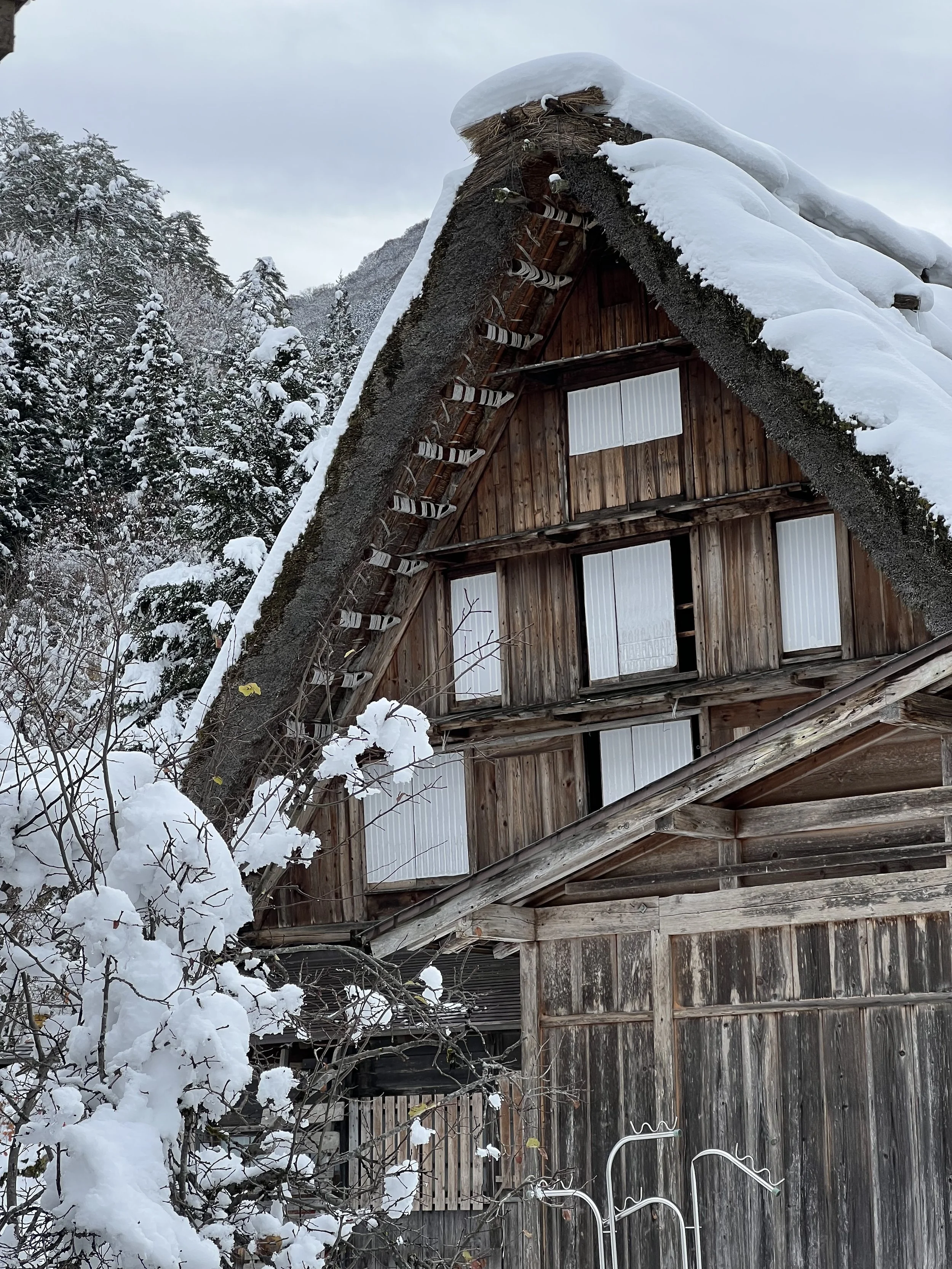
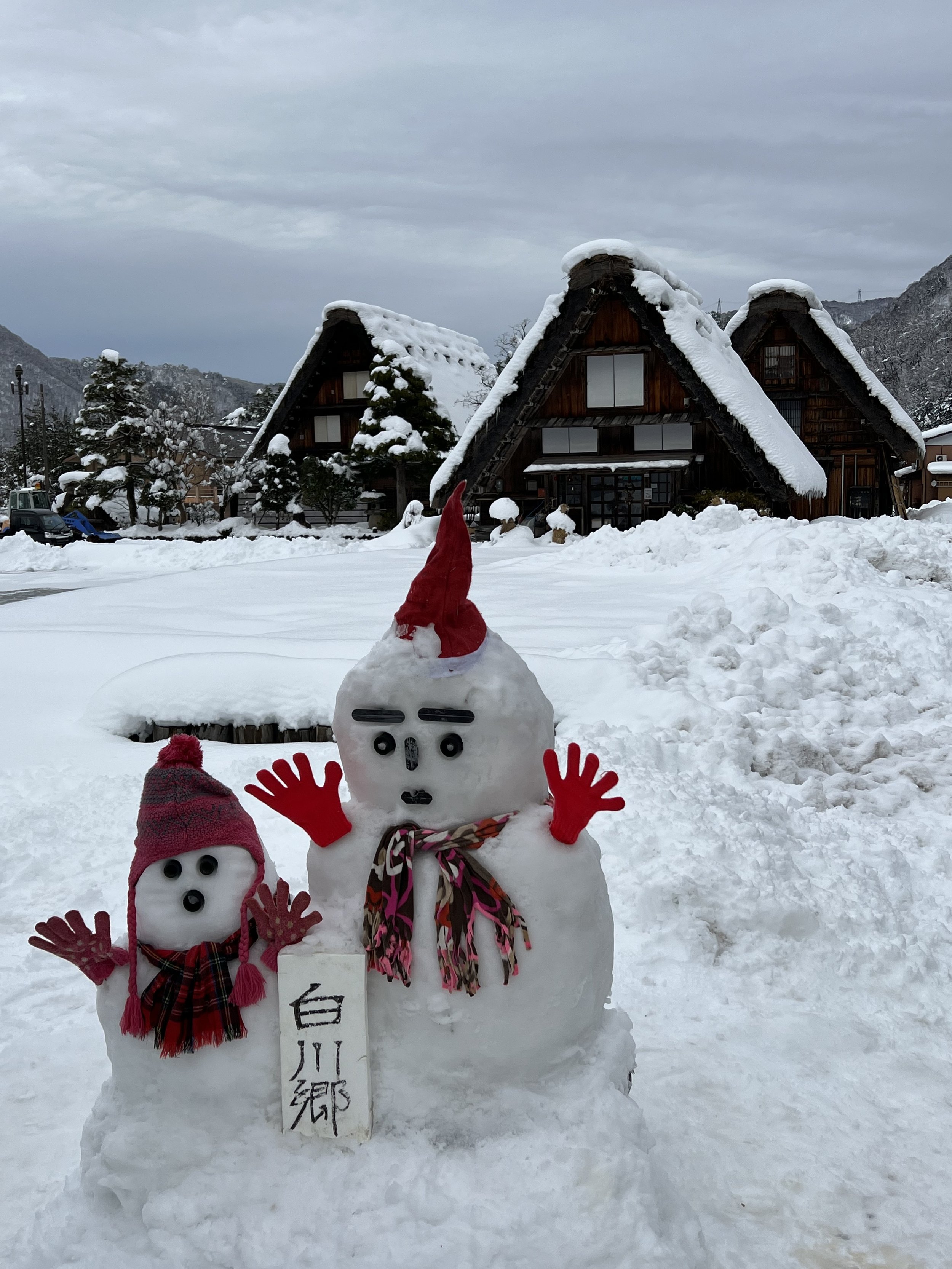
✨ TRAVELY TIP: I’d highly recommend to explore beyond the main street in the adjacent smaller streets and enjoy a leisurely walk. As soon as I did this, I could enjoy a more serene experience. With Shirakawa-go becoming increasingly popular with big groups of tourists, exploring slowly and making a conscious effort to look for quieter and less-crowded spots as you explore Shirakawa-go would definitely be my recommendation.
Pay a Visit to Shirakawa Hachiman Shrine
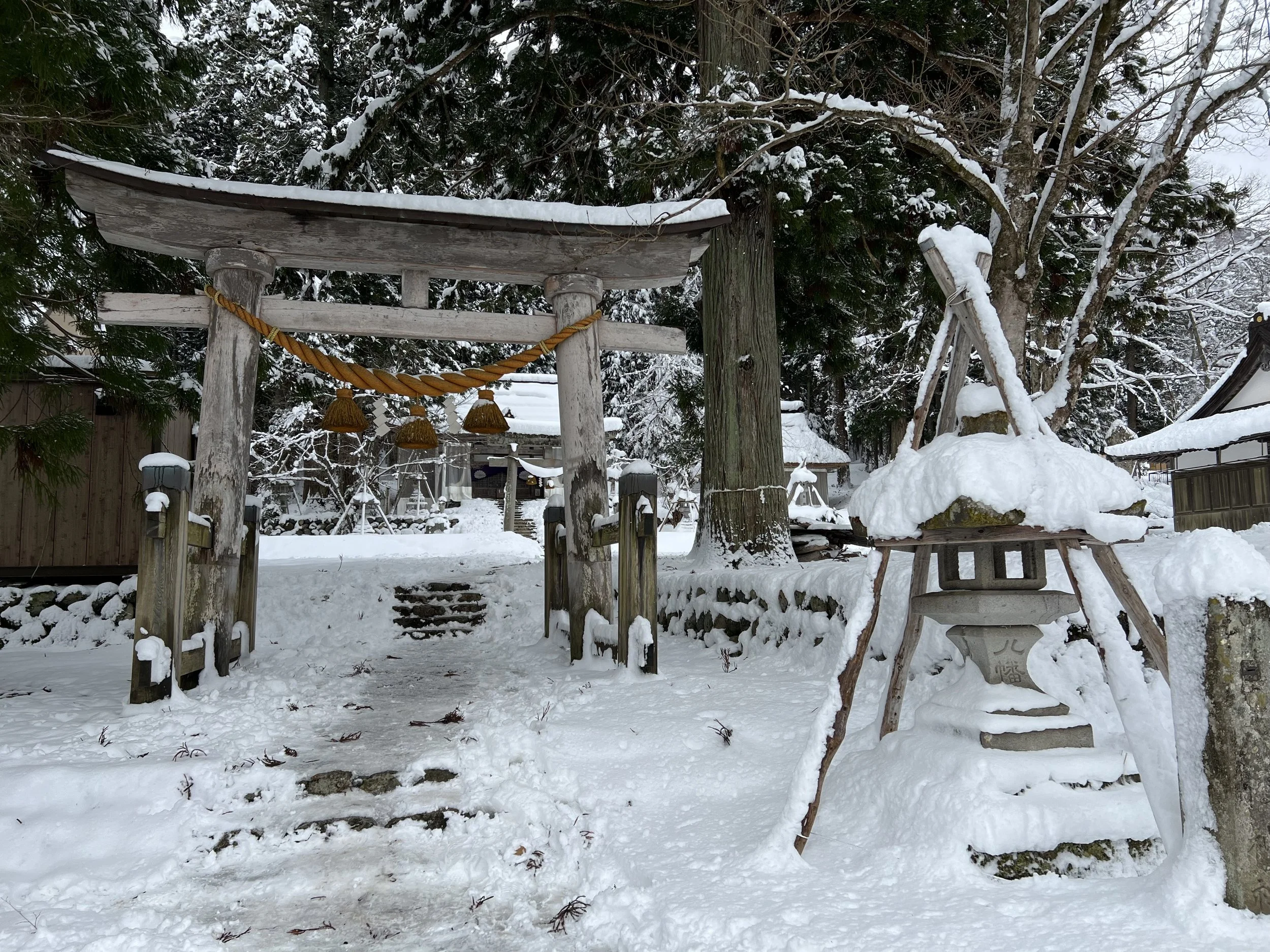
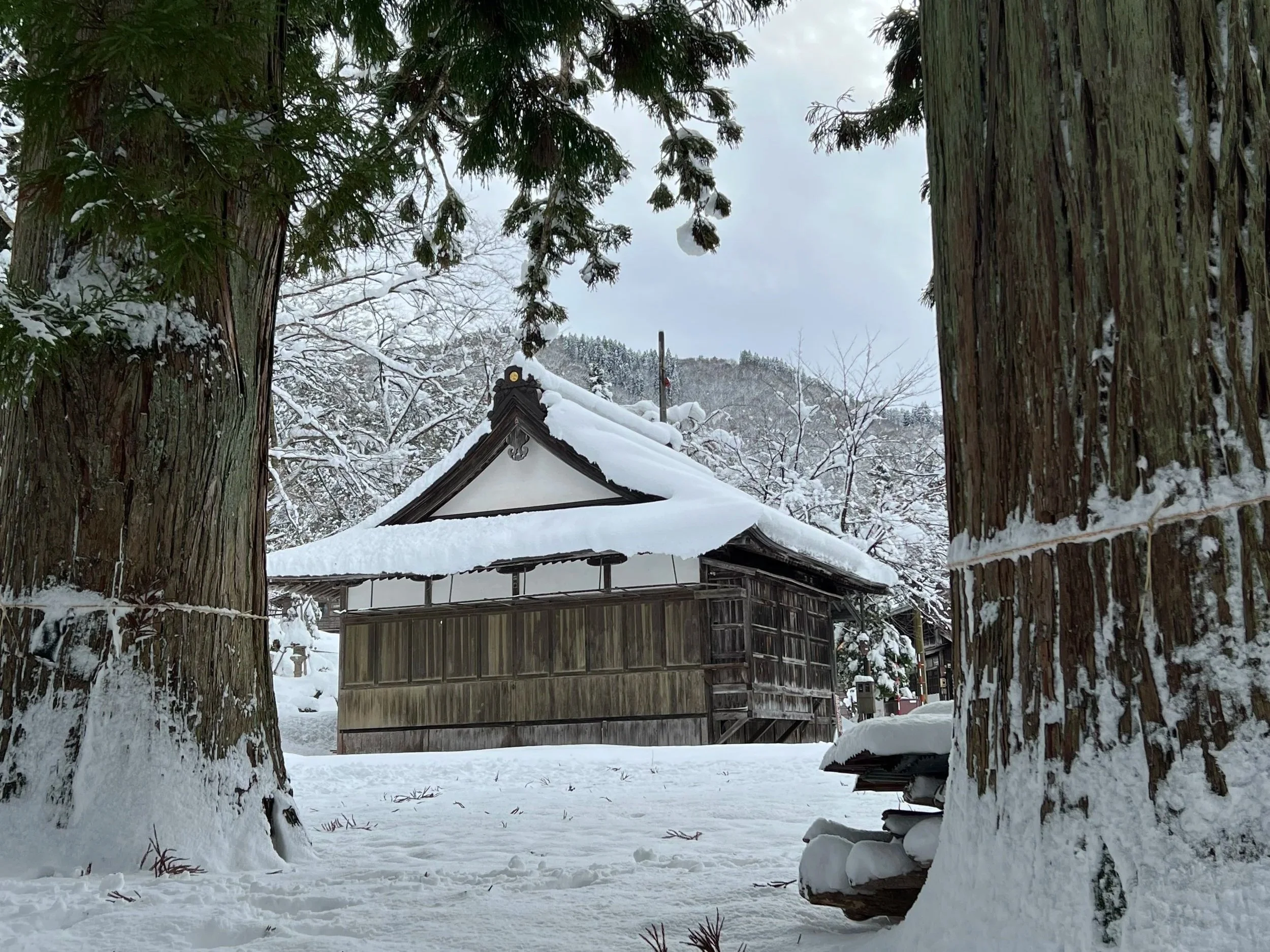
One of my favorite stops was Shirakawa Hachiman Shrine (白川八幡神社). Tucked slightly away from the busiest paths, this peaceful shrine is surrounded by tall cedar trees and feels wonderfully quiet in winter. When I visited, there were barely any visitors around, and one of the things I particularly remember is the beautifully decorated Ema (絵馬), which are small wooden plaques where people write prayers and wishes.
Walk All the Way to Shirakawa-go Three Houses (Sankoya)
Many visitors turn back after visiting Shirakawa-go’s main street, but if you’re up for a longer winter stroll, I highly recommend walking to the Shirakawa-go Three Houses (三小屋). This quieter area offers a fantastic photo opportunity and a chance to enjoy the scenery away from the crowds. It was one of the most peaceful parts of my walk.
Lunch Break Idea: Miso Katsu in a Local Restaurant
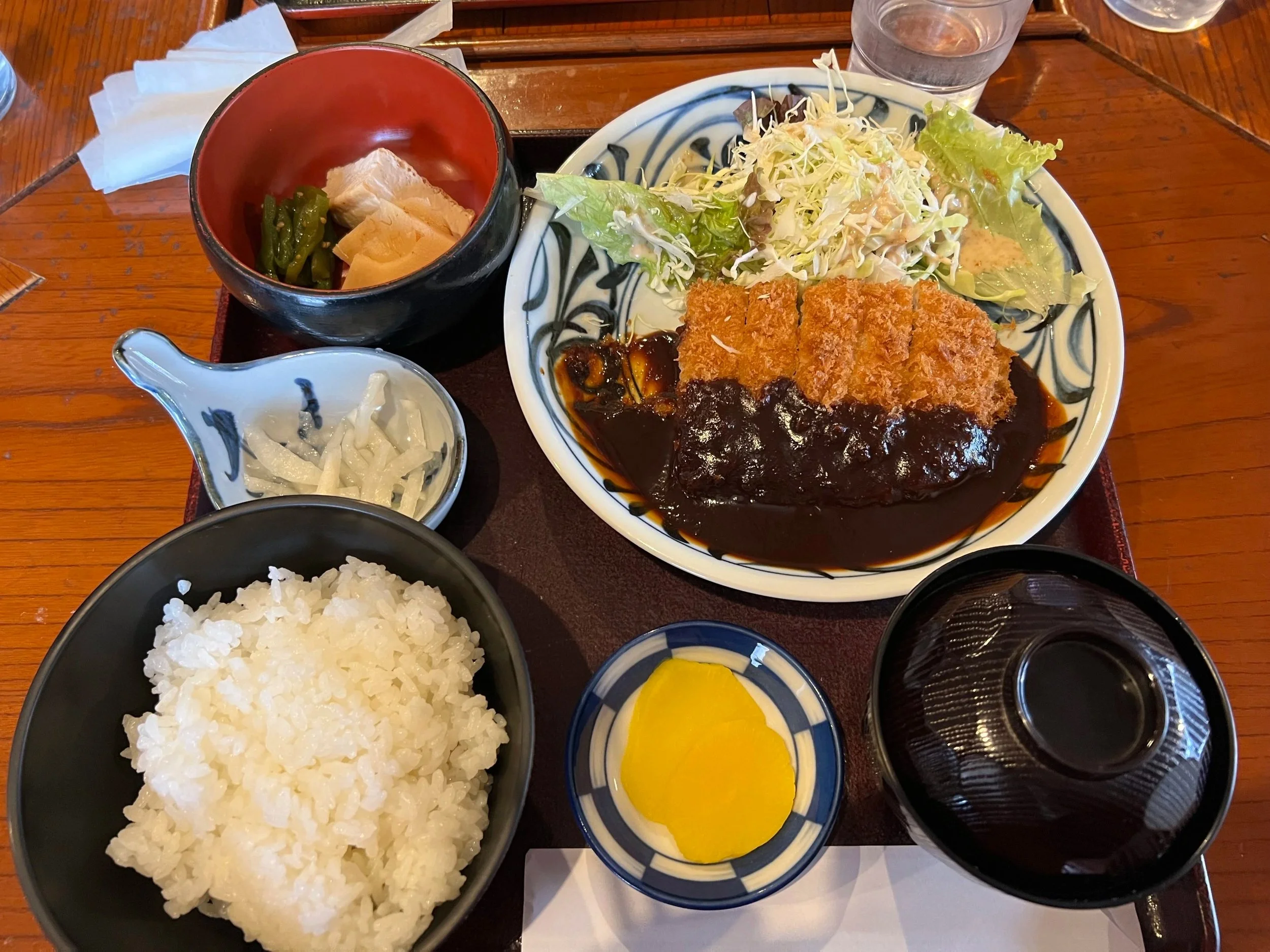
To warm up, I stopped at Shiraogi (しらおぎ) for lunch and ordered a miso katsu teishoku. It was hearty, comforting, and exactly what I needed after walking through the snow.
Soon after, it was time to head back toward the bus terminal for my return trip to Takayama. I wished I could have stayed longer, but with a pre-booked return bus ticket, I had to leave on schedule. It’s something to keep in mind when planning your visit.
Other Things to Do in Shirakawago
Cross Deai Bridge & Visit the Gassho-Zukuri Minka-en
If you cross Deai Bridge (であい橋) over the river, you can visit the Shirakawa-go Gassho-Zukuri Minka-en (白川郷合掌造り民家園). This open-air museum is well worth the ¥600 entrance fee. Based on my personal experience when I visited in spring during the cherry blossom season, it was nearly empty, offering a calm contrast to the busier village center, so I would assume a similar pattern in the winter also.
The museum features 26 historic buildings, including 9 designated as important cultural properties by Gifu Prefecture. Several buildings are open to the public, allowing you to explore traditional interiors and learn more about village life.
Relax in an Onsen at Shirakawa-go no Yu
To end your visit on a relaxing note, consider soaking in one of the baths at Shirakawa-go no Yu (天然温泉 白川郷の湯). I didn’t have the time myself, but think it can be a great way to warm up before heading back. The day-use hours are from 7:00 am to 9:00 pm (closed on Thursdays) and the entrance fee is ¥800 (cash only). If you’re considering visiting, don’t forget to take a towel with you to avoid paying an extra fee for renting it.
Top Travel Tips to Make the Most of You Time in Shirakawa-go
Visiting Shirakawa-go in winter is a magical experience, but it also requires a bit of planning. Snowfall, short daylight hours, and limited transport options mean that timing and preparation can really shape your experience.
When to Visit to Enjoy the Snowy Atmosphere
The best time to see Shirakawa-go covered in snow is from mid December to late February, with January and early February often offering the most reliable snowfall. As a reference, the pictures on this article were taken during my visit in late December a few years ago. If you’re lucky, you may also experience snowfall during your visit, which adds an extra layer of magic, but do keep in mind that heavy snow can occasionally affect transport schedules.
If you want to experience the famous winter light-up illuminations, here are a few things to keep in mind. These illuminations take place on selected evenings in January and February, on limited dates, when many of the village’s gassho-zukuri farmhouses are lit up from 5:30pm to 7:30pm. In 2026, the illuminations are scheduled on January 12, January 18, January 25 and February 1. Access is regulated, and advance reservation and ticket is required. You can find more information on Shirakawa-go tourist association’s website here.
How Long to Spend in Shirakawa-go
A half-day or full-day visit is enough to see the highlights of Shirakawa-go. When I went in the winter, I spent about 3 hours in Shirakawa-go and couldn't stay longer because there were no return bus tickets to Takayama available later in the day. If you want to experience Shirakawa-go at a relaxed pace, I recommend spending at least 4 hours. This gives you time to visit some of the traditional houses and/or the open-air museum, enjoy lunch at a local restaurant, stop by a few shops to find some local souvenirs and omiyage, and maybe even unwind in a hot spring bath before leaving to your next destination.
If you’re visiting Shirakawa-go as a day trip, I’d recommend arriving early in the morning, as the village will feel more peaceful before tour groups arrive. Keep in mind that daylight hours are short in winter, so plan your walk accordingly and avoid arriving too late in the afternoon unless you’re staying overnight.
Indeed, staying overnight is perfect for photography lovers hoping to catch the soft light of sunrise and sunset, or for anyone who wants to slow down and fully immerse themselves in this traditional and peaceful setting. So far, I’ve visited Shirakawa-go in winter and spring as day trips, but next time, I hope to stay overnight, maybe in summer or autumn, to see this different side of the village.
Where to Stay in Shirakawa-go
If you’d like to stay in a traditional gassho-style farmhouse, the Shirakawa-go Tourism Association website provides a list of accommodations, including traditional gassho houses, in the village.
For those looking for a classic ryokan experience, I’d recommend Shiroyamakan, praised for its delicious cuisine and idyllic location right in Ogimachi. If you prefer a more modern stay, CURIO Shirakawago, a stylish boutique hotel located about 15 minute walk from the bus terminal seems like a great option, while Shirakawago Guest House Kei is a solid choice for budget-conscious travelers. For a more exclusive and immersive stay, you could also consider a traditional Japanese residence experience connected with a serene exploration of the Shirakawa-go World Heritage landscape.
Finally, a little further away but with a free shuttle bus from the bus station, a beautiful modern ryokan that looks like a fantastic option is Shirakawago Onyado Yuinosho, with spacious rooms, onsen baths and kaiseki dining options.
➡️ You can look for more accommodation options around Shirakawa-go on Agoda, Booking or Trip.
Accommodation options within Shirakawa-go itself are limited, so booking in advance is highly recommended. If you can’t find availability, a great alternative is to stay in Takayama or Kanazawa and visit Shirakawa-go as a day trip like I did, as both cities offer a wider range of accommodations, and have an easy bus access to Shirakawa-go.
How to Get to Shirakawa-go
Shirakawa-go is not directly connected by train, and the most convenient way to reach the village in the winter months is by public transportation (bus). Most travelers visit from Takayama (高山市) or Kanazawa (金沢市) which have direct bus routes:
From Kanazawa, the journey takes around 1 hour and 15 minutes and costs ¥2,800 one way. The Hokutetsu Bus and Nohi Bus companies run regular highway bus services between Kanazawa Station and Shirakawa-go.
From Takayama, you can take a Nohi Bus to Shirakawa-go (~50 min, ¥2,800 one-way).
You can find more information on bus timetables and how to book your ticket on the Hokutetsu Bus website and Nohi Bus website. You can reserve your bus tickets online or at the bus centers in Kanazawa or Takayama (I’d recommend to book your tickets in advance, especially if you’re going on a weekend or during peak season).
If you're looking to explore Shirakawa-go with the convenience of a guided tour, several platforms, such as GetYourGuide, Klook and KKDay, offer a variety of options with full-day tours departing from cities like Nagoya, Kanazawa or Takayama, for hassle-free arrangements.
Shirakawa-go is also accessible by car, via the Tokai-Hokuriku Expressway. Parking is available at the Shirakawa-go Seseragi Park parking lot and costs ¥2,000 per day. Note that coming by car is not recommended in the winter months, as road conditions are expected to be hazardous due to snow and ice. Winter tires are required between the beginning of December and the end of March and you can also expect heavy traffic congestion in Shirakawa-go during the New Year holiday season. You can check a parking congestion forecast at Shirakawa-go on this website.
For more information about how to get to Shirakawa-go, you can also check the Shirakawa-go Tourism Association’s website.
What and Where to Eat in Shirakawa-go
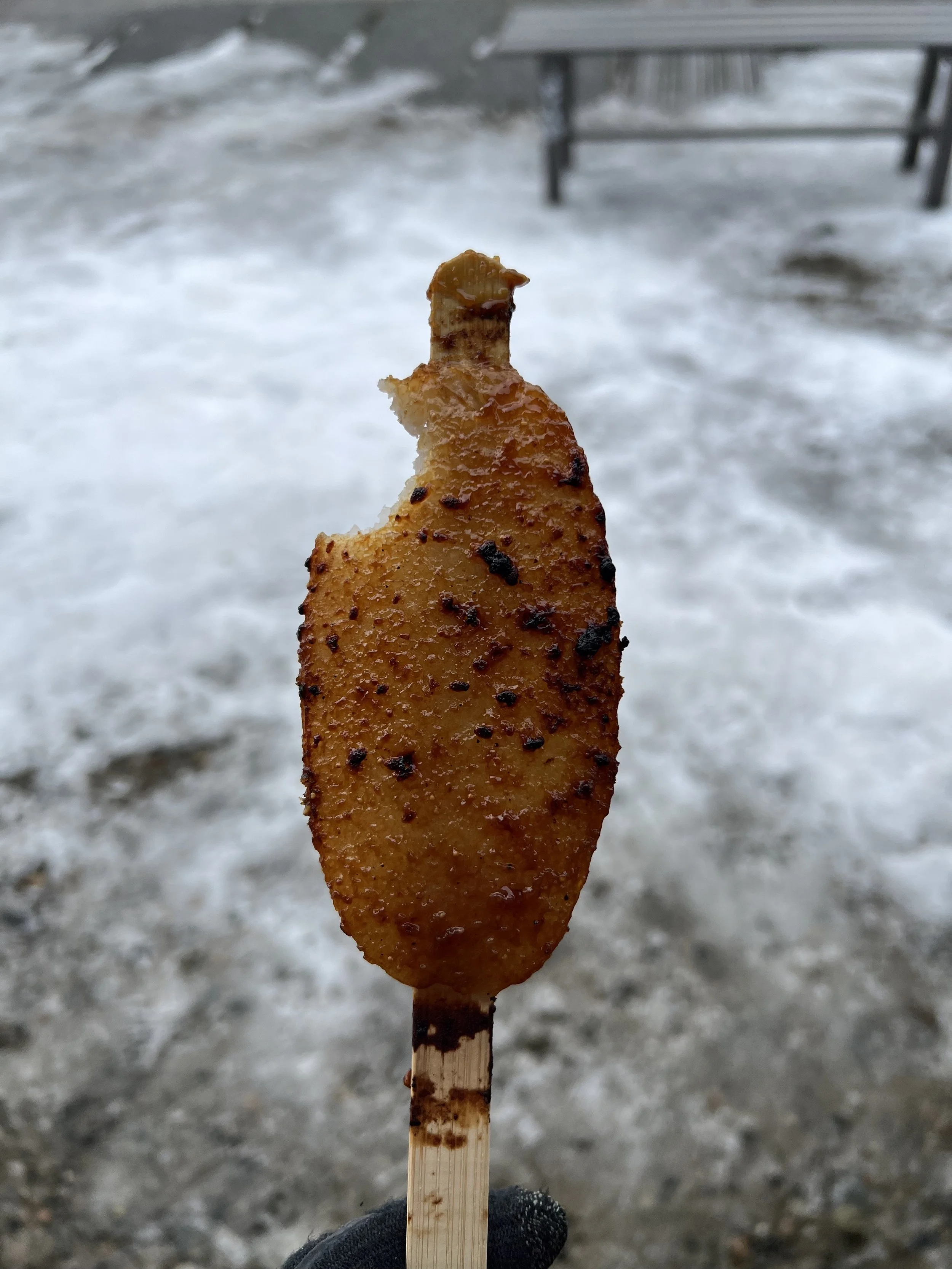
While exploring Shirakawa-go, make sure to try some of the local food specialties, like Hida beef skewers or Gohei mochi (a grilled, flat rice cake coated in a savory-sweet sauce made from miso, soy sauce, and walnuts).
You’ll also find a number of restaurants in the village serving hearty set meals, as well as cozy cafés tucked inside old gassho-style houses, perfect for a dessert break.
What to Wear: Winter Clothing Essentials
Winter in Shirakawa-go can be very cold, with temperatures often dropping below freezing. Snow and ice are common, so proper clothing is essential. I’d recommend a warm, insulated coat, thermal layers, waterproof or snow-resistant boots with good grip, gloves, a scarf and a hat. Covering yourself in Japanese heat packs, also known as kairo (カイロ), is also an option! Staying warm and comfortable will allow you to enjoy walking through the village without rushing.
Final Thoughts on Visiting Shirakawa-go in Winter
Between the snow-covered gassho-zukuri houses, village paths, and the surrounding mountains, Shirakawa-go in winter feels like stepping into a storybook, especially when you slow down and explore beyond the main paths. While it does require some planning, particularly in winter, the experience is absolutely worth it. Whether you’re visiting as a day trip from Takayama or Kanazawa or staying overnight, Shirakawa-go is a place that stays with you long after you’ve left. For me, it remains one of the most magical winter destinations I’ve experienced in Japan, and one I’d happily return to again.
As a matter of fact, I also went to Shirakawa-go in spring during the cherry blossoms season, which you can read about in more detail in my article: Why You Should Visit Shirakawa-go in Spring: A Complete Guide.
It’s in my Japan bucket list to visit Shirakawa-go during each season, so I can’t wait to visit again in autumn and summer!
Looking for more winter destination ideas in Japan? Check out my guides to Shibu Onsen in Nagano Prefecture or Kusatsu Onsen in Gunma Prefecture, among others.
Found this article helpful? Buy me a coffee. 😊
Want to stay in touch? Subscribe to my monthly newsletter (with latest articles, updates, travel tips and more...) delivered straight to your inbox. 📩
Some of the links in this Shirakawa-go Winter Guide are affiliate links. At no extra cost to you, I may earn a small commission when you click on them and make a purchase. And if you do, thanks for your support! Purchasing through these links is a great way to support Travely Notes, as this helps with the costs of running my blog.

Takayama is one of those places in Japan that took me completely by surprise and quickly became one of my top recommendations to include in a Japan itinerary, especially in winter. Tucked away in the mountains of Gifu Prefecture, this historic city still feels relatively under the radar, yet it offers a wonderful glimpse into Japan’s Edo-period. I only had one full day to explore Takayama, so in this article I’m sharing my one-day walking itineraryto help you plan your visit, together with some travel tips based on my experience.